This notice first appeared in the Esperanto language journal La Ondo de Esperanto (The Esperanto Wave) in July 1915 and can be viewed online here.
Shifu was an influential Chinese pioneer of Anarchism. He changed his name on several occasions and was known as Shifu at the end of his life, though in English he's remembered under the name Liu Shifu. He was also an active Esperantist and used the pen name Sifo for Esperanto writings. I translated a short biography of his life earlier, which may help explain some points.
Sifo
Shifu the editor of the Esperanto and Chinese language weekly newspaper The Voice of the People, died in Shanghai from tuberculosis. We take some biographical details about Shifu from his publication's 23rd issue. Shifu was born in 1884 in Hongsang* in the province of Canton. He was an extraordinarily talented boy in his youth. At the age of fifteen, he became a "Sin-Can"** the highest student in the local examinations. He participated energetically within the Chinese political movement and provided a lot of assistance to the well known Doctor Sun Yat-Sen. Sifo edited a progressive newspaper in Hong Kong and opened a school for women.
He was gravely wounded by an explosion and had to have his left hand amputated. Furthermore, he was arrested and while in prison he wrote the text On the reform of prison. After reading this text, the city officials were so stunned by the talent demonstrated by the author that they ordered his release. In total Sifo spent three years in prison, while incarcerated he also wrote texts on linguistics, including a book on the Canton Dialect. In 1912 Shifu founded an Esperanto group and became a Vice delegate for the U.E.A (Universal Esperanto Association). In 1913 Shifu published The Voice of the People, an Esperanto and Chinese language newspaper. It wasn't long before the new newspaper was suppressed and Sifu had to flee to Macau (the Portuguese Colony***) but the Portuguese authorities also disrupted the publication of Voice.
Shifu published Voice, until the money ran out. He was an editor, administrator and printer at the same time. That is why he grew weaker with the publication of each issue, the work finally consumed him totally. When he fell ill, his poverty prevented him from seeing a doctor for treatment. Friends begged him to sell his printing press (Shifu's press was operated by hand, or in his case one-handed) but Shifu refused.
Shifu adored Lev Tolstoy and founded Conscience, a group whose principles were as follows:
Against Meat eating,
Against alcohol
Against smoking
Against slavery
Against using human vehicles (I.e. Rickshaws and pedicabs)
Against marriage
Against families
Against deputation
Against political parties
Against state officials
Against war
Against religion
During his sickness, his friends begged him to eat meat, but he kept his principles until his death.
We acknowledge the highly civilized principles of Shifu, but express extreme regret over his death. China has lost one of the most fervent and sincere pioneers of the international language.
*I have not been able to figure out what the modern name of the city is, the English language biographies just refer to him being born in the Canton area.
** I don't know what that means, I believe this is an academic achievement, the second obituary by the British Esperantist goes into a bit more detail about this period of Shifu's life and I found a little more information in some brief biographies written in English.
** Returned to the control of the People's Republic in 1999.
Obituary from the British Esperantist, published in 1915, the original article can be found online here. And continues onto the following page.
Mr Sifu
Here is a biography of a remarkable man, excerpted from The Voice of the People, a weekly Chinese and Esperanto language newspaper. We present it here without changes.
Biography of Mr Sifu
Mr Shifu was born in 1884 in the city of Hongsang in Canton province. He was an extraordinarily talented boy in his youth. At the age of
fifteen, he became a "Sin-Can" the highest student in the local
examinations. However, he did not want to submit to the institution which demanded he behave like a slave. Instead, he taught himself about many practical sciences and read every kind of book he could find. Although he learnt without a guide, he came to understand many subjects at a profound level. In 1901 an 18-year-old Shifu appalled by the suffering of the people and disgusted with the rot and corruption of the government organised a public speech in his home city to inspire a political revolution, it made a good impression. He later travelled to Japan. While in Japan, he met Sun Yat-sen who was staying in Japan to recruit supporters for his organisation "Tongmenghui" after the failure of his revolt in Huizhou (1900). Shifu assisted Sun Yat-sen for a time. Shortly after, Shifu returned to China and started publishing a progressive newspaper in Hong Kong and founded a school for women. In 1907 the revolutionaries attempted to resume their activities. At that time, the official Lee Tseng ruled over Canton and opposed the revolutionary movement. Shifu believed that the first step had to be the removal of this devil. Sifu lay in wait one morning with a suitcase for Lee Tseng to pass-by on the road, unfortunately the suitcase exploded before Lee Tseng had appeared. Shifu was wounded in the arms, head and chest. The police sent him unconscious to a hospital, after a month in hospital and a surgical amputation of his left arm he recovered from his wounds. Of course, he was tried in a courthouse.
Shifu defended himself on several pretexts, but due to suspicion was sentenced to prison. While in prison, a living hell, he wrote the text On the reform of prison. After reading this text,
the city officials were so stunned by the talent demonstrated by the
author that they ordered his release. In three years of prison, instead of giving in to depression, he worked on the book "Cantonese Dialect", a work so brilliant that even famous linguists admired it. After leaving prison, he met with some sympathisers and founded a group for assassinations. In 1911 a member of this group Lin Kaun-Si threw a bomb at Lee Tseng while Shifu wished to go to Beijing to kill the Qing Prince Regent Zaifeng. Shifu was in Shanghai when the Qing Emperor abdicated, seeing a good opportunity to promote his ideas, he returned to Canton and founded the Fui Min (The Cock crows in Darkness) school.
As you know, Chinese students of Anarchism in Paris had already begun publishing a Chinese language newspaper, The New Times. In its pages, many translations of different Anarchist ideas appeared, including Bakunin and Kropotkin. However, importing these ideas into China proved very difficult. Fui Min collecting The New Times and published them as small pamphlets that were easy to circulate, effectively becoming the soil seed of Anarchism planted within China.
In 1912 Shifu founded an Esperanto group and soon became a Vice delegate for the U.E.A. In the summer of 1913 when civil war broke out within China he witnessed with his own eyes the crimes of the warlords and fervently attacked militarism in articles that were published in both Esperanto and Chinese in the newspaper The Voice of the People Issues 1 and 2. As a consequence The Voice was suppressed and Shifu had to escape persecution to Macau which is ruled by the Portuguese. But the Portuguese authorities agreed with their Chinese counterparts to prevent the publication of Shifu's work. That is why The Voice has only reappeared now after two years of great hardship. In July of last year, Shifu founded the "Anarchist-Communist Group" in Shanghai, which is influencing the founding of regional groups to spread Anarchist ideas throughout China.
Shifu was brave, tolerant, decisive and hard-working. He published The Voice, with no funds and very few assistants. He was also its editor and administrator, but none of this frightened him. It is true that he was also quite sickly, as such he would fall ill after every issue of The Voice appeared and would rest for a short time before working just as hard as before once he started to recover. Understandably, this consumed his young life. When he fell ill, his poverty prevented him from hiring a doctor. We begged him to sell his press (his printing press was operated by hand) but he refused, explaining that the press was the sole source of life for our ideas in the East. It would be futile to save one person by selling it.
Later with the help of some friends we were able to send Shifu to hospital, but alas! It was too late. The disease is incurable and so, at 10 o'clock in the morning of the 27th of March 1915 Shifu passed away aged 31.
Shifu adored Lev Tolstoy not just for his wisdom, but also for his morality. Together with some friends, he founded Conscience, a group whose principles were as follows:
Against Meat eating,
Against alcohol
Against smoking
Against slavery
Against using human vehicles (I.e. Rickshaws and pedicabs)
Against marriage
Against families
Against deputation
Against political parties
Against state officials
Against war
Against religion
During his sickness, his Doctor advised him to eat meat to keep his body strong, but he kept his principles until his death.
Text of a lecture for the Vegan Meeting in Castle Gresilion Paris
on the 2018-05-11.
ISK
Vegetarianism in the ISK: History according to End the
Slaughter!
ISK, Esperanto and SAT
Sources
[Note; While translating the first section of Gary Mickle's text
I discovered that most of the first section had already been translated
into English and was being used as the English wikipedia page entry for
the ISK. So I used that and translated the parts that were not in it.
Section 1's Political ideas through to the end is my translation.
Reddebrek]
1.
ISK
The Internationale Sozialistische Kampfbund (ISK) was a
socialist split from the Social Democratic Party (SPD) during the
Weimar Republic period, and it was active in the resistance against
National Socialism (Nazism). Internationally it used the names
Militant Socialist International (in English), Internationale
Militante Socialiste (in French) and in Esperanto the name
Internacio de Socialista Kunbatalo.
History
Founded in 1925 the ISK was the
political organisation and platform for a circle that had gathered
around the philosophy of Göttingen Leonard Nelson and his
collaborator Minna Specht. It was preceded by an organization the
International Socialist Youth League (ISJ) that arose in the context
of the youth movement of the turn of the century, founded by Nelson
and Specht in 1917 with the support of Albert Einstein. Leonard
Nelson, philosophically speaking heavily tied to Neo-Kantianism-
wanted to become a University Professor whose political impact
surpassed the limits of the University. He was a defender of an
ethically motivated, anti-clerical, anti-Marxist, but also
anti-democratic oriented socialism, which included strict compulsory
adherence to animal protection and vegetarianism. Nelson decided to
found the ISK, after the ISJ were expelled from both the Communist
Party (KPD) in 1922 and the SPD in 1925.
The ISK took over the ISYL's publishing
label, Öffentliches Leben, which published the ISK newsletter
beginning January 1, 1926. Beginning January 1929, an edition in
Esperanto was
added, and in April, a small circulation quarterly in English was
added as well. It was usually eight pages and editions ran an average
of 5,000 to 6,000 copies. Nelson moved his main published works there
as well, his philosophical and political series Öffentliches
Leben and his 1904 treatises, "Abhandlungen der
Fries’schen
Schule, Neue Folge", re-reasoned with mathematicianGerhard
Hessenberg and physiologist
Karl Kaiser, and which, after Nelson's death, was continued by Nobel
Prize winner Otto
Meyerhof, sociologistFranz
Oppenheimer and Minna Specht until 1937.
With the growing electoral
success of the Nazis at the end of the Weimar Republic, the ISK
founded the newspaper, Der
Funke to confront the situation. Of particular note was the
"Urgent
Call for Unity" (Dringender Appell für die Einheit)
regarding the July
1932 federal election. It appeared in the newspaper and on
placards all over Berlin.
Calling for unity and support of the SPD and the KPD
in order to thwart further gains by the Nazis, it was signed by 33
leading German intellectuals, including scientists Albert Einstein,
Franz Oppenheimer, Emil
Gumbel, Arthur
Kronfeld, the artist Käthe
Kollwitz, writers Kurt
Hiller, Erich
Kästner, Heinrich
Mann, Ernst
Toller and Arnold
Zweig and many others.[3]
The ISK continued to work in the resistance
after the 1933 Nazi ban.
The ISK had destroyed all written party records and until 1938,
remained undetected, while the larger parties, the KPD and SPD, were
being battered by massive arrests. The ISK was therefore able to
continue its resistance work, helping political refugees leave the
country, conducting sabotage
and distributing leaflets. In 1938, however, a wave of arrests hit
the ISK.[4]
A main focus of the work was the attempt to build a clandestine trade
union, the Unabhängige Sozialistische Gewerkschaft
("Independent Socialist Union"), which also supported the
Internationale
Transport Workers' Federation.[5]
The ISK's best known act of resistance was the sabotage of the
opening of the Reichsautobahn
on May 19, 1935. The night before Hitler's trip to inaugurate the new
highway, ISK activists wrote anti-Hitler slogans, such as
"Hitler = War" and "Down with Hitler",
on all the bridges along the route between Frankfurt
am Main and Darmstadt,
where he was to travel.[6]
The Nazi
propaganda film produced of the event had to be edited numerous
times.
In exile, the ISK also published the Reinhart Briefe
("Reinhart Letters") and Sozialistische
Warte, which were then smuggled into Germany. Because of
their factual and unpolemical reporting, these were valued by various
members of the German Resistance. The ISK was linked with the
Socialist
Vanguard Group in England and the Internationale Militante
Socialiste in France.
ISK members
after 1945
After World
War II, the ISK was merged into the SPD on December 10, 1945
after talks between Willi
Eichler, chairman of the ISK and Kurt
Schumacher, then chairman of the SPD. Most of the former ISK
members then joined the SPD.[5]
One prominent member of the ISK, Ludwig
Gehm, was later the national vice chairman of the Committee of
Formerly Persecuted Social Democrats (Arbeitsgemeinschaft ehemals
verfolgter Sozialdemokraten) and a Frankfurt
am Main city council member from the SPD. Eichler, who was
chairman of the ISK for many years, represented the SPD in the
Bundestag from
1949 to 1953 and is considered one of the main authors of the
Godesberg
Program. Alfred
Kubel was a member of the Lower
Saxony state government for many years and was Ministerpräsident
from 1970 to 1976. Hamburger ISK member Hellmut
Kalbitzer was elected to the Bundestag several times, served in
the HamburgBürgerschaft
and from 1958 to 1962, was vice president of the European
Parliament. Fritz
Eberhard, who was in the ISK until 1939, was a member of the
Parlamentarischer
Rat ("Parliamentary Council") and was involved in
writing the postwar constitution,
including the right to conscientious
objector status in the new laws
of the Federal
Republic of Germany.
Eichler also published a monthly magazine from 1946 until his
death in 1971, Geist und Tat, which was devoted to "rights,
freedom and culture" and he had a publishing house, Europäische
Verlagsanstalt until the 1960s.
Structure
The ISK never set out to amass a large membership, but rather to
become an active and hard-hitting organization. Membership
requirements for prospective candidates included adherence to a
certain ethical
socialism that were more stringent than for the major parties.
Members were to abstain from
nicotine, alcohol and meat, were to be absolutely punctual and
orderly, and because of the anti-clerical position of the
organization, withdrawal from church affiliation was mandatory
Participation in a trade union,
the ISK and the labor movement was general requirement for members
(eliminating passive membership)
Instead of a membership fee, there was a "Party tax,"
which all members with an income over 150 Reichsmarks
had to pay
The ISK never had more than 300 members, largely because of the
strict requirements for membership. These members were organized into
32 local groups. However, its political work involved sympathizers,
between 600 and 1,000 in 1933. A survey in 1929 revealed that 85% of
ISK members were under 35 years of age.
Chairmen of the ISK (formerly, the ISYL)
1922–1927, Leonard Nelson and
Minna Specht
1927–1945, Willi Eichler and Minna Specht
From 1924 to 1933, the ISK (and its forerunner, the ISYL)
maintained its rural school, the Walkemühle in the
Adelshausen quarter of Melsungen,
Hesse and from 1931
to 1933, its own newspaper, Der Funke, both of which were
banned by the Nazis.
Political Ideas
The relationship
between the rank and file ISK membership and its founder and chief
ideologue Leonard Nelson has been described as a “personal cult”.
Nelson rejected the democratic principle, in which the majority
decision is to be treated as rational. In its place he used what he
called a rational-leader-principle, which has some obvious
problematic elements. Nelson promoted the concept of a rational
dictatorship, believing that it was possible to ascertain in an
objective manner what needed to be done. The ethics of science would
become the foundation of a politics of science. Nelson believed that
science could show what is just, i.e. in accordance with moral law,
so the rational individual who has a keen enough grasp of science
will know the moral and intellectually best ways to run society they
must be free from limits. An all-powerful state should carry out any
and all reforms deemed necessary.
Nelson opposed the
Marxist teachings of the historical necessity of capitalism to the
development of socialism and communism. Instead he promoted human
responsibility and the necessity of a “moral compass”. He based
these beliefs in his readings of Immanuel Kant.
Since its creation
ISK was strictly anti-nationalist and anti-militarist. During the war
Eichler publicly expressed opposition to the dogma of national
sovereignty. The ISK also practiced sexual equality amongst its
membership by promoting equality of rights for women.
The group promoted
a mix of non-authoritarian and authoritarian structures within its
orbit. On the one hand its educational service Walkemühle instructed
both adults and youths on the importance of critical thinking and
some of the latest concepts of the time. While on the other hand ISK
described the training of civil servants as an example of
authoritarianism.
Poster of the “Internationaler Sozialistischer Kampfbund” (ISK),
a foundation of
Leonard Nelsons for the parliament elections in 1932. Signed by Kronfeld,
Albert Einstein
and Franz Oppenheimer and well known artists like Kurt Hiller, Erich
Kästner, Karl and
Käthe Kollwitz, Heinrich Mann, Ernst Toller and Arnold Zweig.
2.
Vegetarianism in the ISK and the anti-Fascist Resistance
As described, a vegetarian way of life was a mandatory membership
condition in ISK. Through its publications it propagated
vegetarianism in Germany and abroad. It organized group visits in
slaughterhouses to convince the workers to renounce their work and
the other violent ways humans relate to animals. Willi Eichler ISK
co-president since 1927 documents one of these visits in his 1926
essay “Even Vegetarians?” Recently that essay
has been circulated again by social democrats acting in the group
Sozis für Tiere (Social Democrats for animals). Willi Eichler would
join the SPD in the aftermath of the Second World War and moderate
his politics. He led the commission that developed the social
democratic Program of Godesberg (accepted in 1959), in which the idea
of socialism appeared only in a very diluted form, and which many
later regarded as a road map for the right-wing in that party. I
could not find out if he remained a lifelong vegetarian.
Nelson agreed with Eichler: "A worker who
wishes more than a guarantee he will not become a capitalist and for
whom the fight against all exploitation is a serious matter, he does
not bow before the pressure of public opinion toward the habit of
exploiting harmless animals, he does not participate in the daily
millionfold murder."
The resistance activity of the ISK against the
Nazi rule was effective, if we consider the enormous difficulties and
the small membership. Cunning means were applied, and one of them
made use of vegetarianism - more on that later.
At the beginning of Nazi rule, the ISK
formulated 4 objectives for resistance activity: information,
propaganda, anti-Nazi actions, and security for the group. One means
was illegal leafleting. The Nazis held elections of worker
representatives in companies, admitting only "suitable"
candidates. The ISK campaigned for a vote of no confidence against
all candidates - until the Nazis gave up on the elections in 1936 due
to the lack of popular support for their picked candidates. (Only
50-60% voted for the official list.) Also in 1936, ISK members also
collected money in workplaces for the resistance in Spain.
At the inauguration of a highway, it was
discovered that the bridges were painted overnight with chemicals
that can be seen only when daylight hits them, and the speaker
systems had been sabotaged. Two SS members were later executed for
insufficient vigilance. Invisible paint, which is visible in
daylight, was also used for to daub slogans
on the pavement, using suitcases with a special mechanism. A grassy
hill next to the Berlin railway was chosen
for an action using fertilizer poured from
canisters. After a few weeks the hill was
marked with the slogan "Nieder mit
Hitler" [Death to
Hitler].
The ISK also
discussed a plan to kill Hitler via a suicide attack, but the plan
was opposed by some members and did not go beyond discussions.
The anti-Nazi activity included a set of vegetarian restaurants,
which ISK members operated in several cities and used for clandestine
purposes. Some had opened before 1933, the remainder opened after the
rise to power from the Nazis. Large restaurants were founded in
Berlin, Hamburg, Frankfurt am Main and Bochum. According to one
report, the Hamburg restaurant prepared 120 lunches a day.
They were often led by women, but both men and women worked in
them. The working day was long and the pay low. The restaurants
served several purposes: to provide work to the unemployed, to
generate a profit that was used for resistance activity, enable
contact between resistance agents in a relatively unsuspicious place,
serve as bases for production and distribution of illegal printing
material etc. However, they also served for promote vegetarianism.
A wave of arrests in 1937 forced many restaurant workers to flee
abroad or to live in hiding. Two fugitives founded vegetarian
restaurants in Paris and London. The restaurant in Paris became a
contact point for exiled Germans and was also a source of funds. The
same for the restaurant in London. There they were supported by a
group linked to Nelson inside the Labour Party, the Socialist
Vanguard Group, the British affiliate to the Militant Socialist
International (ISK).
Here is a somewhat extensive quote from a document from the City
Archives of Göttingen, which captures the atmosphere of the era and
also paints a picture of the spread of vegetarianism in Germany at
the time and the political implications of it, e.g. the spread of the
legend about Hitler being “Vegetarian”:
Next to the premises of the ISK in the city, the
vegetarian restaurant can be seen, operated by the mother of Fritz
and Helmut Schmalz on Weenderstraße 71/72. August Schmalz was member
in the ISK since 1927; she had already led vegetarian cooking courses
in the Walkemühle. Vegetarian restaurants were a financial pillar of
the organization, although more profitable and useful for that
purpose were the restaurants in the bigger cities like Berlin,
Hamburg (Anna Kothe worked there since 1934, who for a long time
worked in the headquarters in Göttingen as a housekeeper), Cologne
or Frankfurt. Auguste Schmalz's vegetarian luncheonette has been
around since at least 1931 and was a regular meeting place. Hannah
Vogt recalled: “I remember a place in Weender Straße – which was
led by the mother of trade unionist Fritz Schmalz – where everyone
had a vegetarian lunch. Many of them regularly met there.” Since
spring of 1933 the premises were observed, however the police failed
to prove that the guests of the Schmalz lunchroom participated in
anti government discussions.
The income opportunities that opened up with such a
restaurant also attracted the greedy gaze of the "Volksgenossen"
[Nazi term, roughly means People’s comrades, used as a term for
correct i.e. Nazi behaviour]. In a letter to the rector of the
university at the end of October 1933, someone proposed a remedy
against an urgent lack of food for the students. He said that among
the 4,000 students there are at least 150 vegetarians, "who now
wish to live according to the way of life of our people's
chancellor", but can't, because "the only vegetarian lunch
place here (...) is run by the ex-communist Schmalz". According
to the writer, he even makes an advertisement by posting it on the
blackboard of the auditorium, despite the fact that it is possible to
prove, "that the students are being influenced by propaganda
there, acting at that in a very refined manner”. The author of the
letter thought his “most noble task to provide the students of the
University of Göttingen with the cheapest high-quality food, in
accordance with the new theory of nutrition". Of course he hoped
for the support from the rector for his "valuable idea, also
represented by Hitler, Rudolf Hess, Göbbels (!) and even many
professors in Göttingen". Schmalz's lunchroom survived despite
these attacks and denouncements at least until the beginning of the
war.
3.
ISK, Esperanto and SAT
The ISK attempted to spread beyond the borders of Germany in their
early days and adopted Esperanto as one of the means to achieve this.
Registered in bibliographies is the edition of the quarterly
Esperanto-language Organo de Internacio de Socialista Kunbatalo since
1929 (before the appearance of a similar publication in English).
After the Autumn of 1933 it appeared in Paris under the name The
Critical Observer: magazine of politics and culture. It
continued to be published until the end of 1939 if not longer.
Hermann Platiel was credited as its editor after the move to Paris,
but its possible that he occupied that position earlier.
The ISK published a daily
newspaper Der Funke
[The Spark] for 14 months, between 1932-01-01 and 1933-02-17. Then it
was banned. The release necessitated great sacrifices, inevitable for
such a small organization. Notable in it is the striving for a
working class united front against the looming fascism and the very
critical reporting on nationalism in general. The complete journal
collection is now archived online. There you can find three kindly
written articles about SAT and its congress from 1932 in Stuttgart.
Although one would expect that their author would be Hermann Platiel,
the authors used initials ("M. H.", "Rpt.", "O.
W.") do not match that assumption.
Some excerpts from the articles:
Party political
neutrality among the Worker Esperantists
(from Der Funke 1932-06-05) In the Esperanto Labour movement, whose
most important, global organization is SAT (World Anti-national
Association), the party political disputes, especially between the CP
and the SP, was not missing. In Germany there are already in many
cities separate communist and social democratic Esperanto groups. All
the more gratifying that the president of SAT, Lanti, who also
publishes the Esperanto newspaper Sennaciulo, stands entirely on the
ground of the party political neutrality of SAT. In an open letter to
many SAT members he assumes a position against the communist attempts
to link SAT to a definite political program, by which the CP wants to
secure for itself a better foundation for its domination. The CP
wants first, that SAT compels all members to recognize Marxism as
“the correct basis on which the firm unity of the proletarian
Esperantists can be founded".
[…]
In addition, Lanti quite rightly throws back the opinion
that non-Marxist viewpoints such as those of Nelson, Kropotkin or
Gesell should remain undiscussed in the newspaper, because "the
vast majority of organized workers recognize Marxism as the
theoretical basis for their class struggle”. That is totally
incorrect - let's think about England, Spain or India!
[…]
It is desirable that Lanti's positions continue to be
guiding SAT and its newspaper, so that the very desirable propaganda
for Esperanto as an international means of understanding, especially
as a tool for a fighting working class should not be hindered by a
dogmatic and party-politically narrow framework.
We greet the Esperantists in Stuttgart [title
originally in Esperanto] (from Der Funke 1932-08-06) In the second
week of August, the 12th congress of ... SAT meets in Stuttgart. […]
SAT for two reasons is particularly called to work on the
creation of the socialist united front: Its members are linked by the
bond of a common language. […] SAT also fulfills an important
prerequisite for the collaboration in the creation of united front of
the various workers parties. The management of SAT has been resisting
firmly and successfully for years against the disrespect of party
political neutrality within the Association. [...]
The working Esperantists in Stuttgart (from Der
Funke 1932-09-01) The 12th congress of the world association of
working Esperantists (SAT) 250 comrades from 12 countries
participated despite the bad economic situation.
[…]
The most important result of the congress was the
re-securing of the party political neutrality of SAT.
[…]
Also the efforts to change the current structure of SAT –
a union of all the proletarian Esperantists without regard to their
nationality or race - by associating national associations, were
unanimously rejected.
With the exception of the proposers, all the comrades
emphasized the necessity right now, of a front between the workers
and the growing wave of nationalism, not only emphasizing the
international connectedness of the proletariat, but also to
practically realize it, for which purpose the present stateless
organizational form offers the best basis.
[...]
Its known that Hermann Platiel
was both an ISK and SAT member. Born in 1896 (or possibly 1886) and
died in 1980, Platiel was hired as an administrator for the SAT
office in Leipzig from the 8th
of May 1929 until 1932. In Leipzig he also led the local ISK branch.
After Lanti stood down from the post it was Platiel who became the
President and Director of SAT from 1933-35. SAT published his text
History of the schism in the Workers Esperanto-Movement:
Documentation which shows the causes and responsibilities and
prepares the foundation for united action. He
then became the secretary of the French Esperanto section of ISK
1938-39. I do not know if he has been active in SAT since the 40s or
maintained any relationship with Esperanto at all. Petro Levi who
joined SAT shortly after the war does not remember seeing him when I
asked, and I was not able to find anything online, though of course
there are still other sources to check,
In 1943 he illegally fled to
Switzerland, and worked for the "Schweizer Hilfswerk"
(Swiss Relief Fund) and wrote reports for the London foreign
leadership of ISK. Before the escape to Switzerland he was located in
the southern French city of Montauban, to which he fled from the
internment camp in Gurs. There he married with well-known ISK member
Nora Platiel (née Block). In 1949 they settled in the German city of
Kassel, where Nora began a career as a court jurist and then a
representative of the Hesse parliament (for the SPD). Hermann worked
as a director of a theatre in Kassel, according to reports with great
commitment.
This summary of facts about ISK's
relations with Esperanto and especially with SAT is very incomplete.
Further research would be worthwhile. Research in the archive of SAT
in Paris should provide insights about that, also about Hermann
Platiel personally, and would answer the question whether he and
possibly others ISK members played a role in the then Vegetarian
Section of SAT, which we can guess, but do not know now.
4.
Sources
• Das Schlachten beenden!, Verlag Graswurzelrevolution,
Nettersheim 2010 [GWR estas
monata ĵurnalo kaj eldonejo dediĉitaj al senperforta anarkiismo,
kun ekologia emfazo kaj
simpatianta kun veganismo; pli ĉe www.graswurzel.net]
• Heiner Lindner: Um etwas zu erreichen, muss man sich etwas
vornehmen, von dem man
glaubt, dass es unmöglich sei – Der Internationale
Sozialistische Kampf-Bund (ISK) und
seine Publikationen, Friedrich-Ebert-Stiftung 2006,
http://library.fes.de/pdf-
files/historiker/03535.pdf
• Vikipedio germanlingva: ISK, Nora Platiel kaj esperantlingva
pri Hermann Platiel
• urba arkivejo de Göttingen:
http://www.stadtarchiv.goettingen.de/widerstand/texte/isk-
La intermilita periodo, inter 1920 kaj 1940, estis ja riĉa je eventoj kaj ŝanĝoj por la laborista movado per la fondo de SAT, Sennacieca Asocio Tutmonda, la eldono de multnombraj libroj, inkluzive de la Plena Vortaro de Esperanto, kaj revuoj kiel Sennacieca Revuo.
(Ne forgesu, ke ĉiuj EsKu-aj filmetoj havas subtitolojn. Ne hezitu uzi ilin)
Saluton al vi ĉiuj, spektantoj de EsKu, nia nun tre bone konata kanalo pri Esperanto-Kulturo.
Se unuafoje vi malkovras ĉi tiun filmserion, sciu ke vi povas aboni la kanalon, dank’ al la butono «abono».
Tion farinte, vi ne maltrafos niajn venontajn filmetojn.
Kio estos la temo de via hodiaŭa parolado, Pascal?
Viaj
du antaŭaj filmoj, la 35-a kaj la 37-a, pritraktis la evoluon de la
neŭtrala movadparto inter la Unua kaj la Dua Mondmilitoj.
Supozeble vi nun klarigos, kiel anoncite fine de la filmo 37-a, la evoluon de la laborista movadflanko en la sama epoko.
Saluton, karaj spektantoj de EsKu! Vi pravas pri la hodiaŭa temo, Thierry.
La intermilita periodo, inter 1920 kaj 1940, estis ja riĉa je eventoj kaj ŝanĝoj por ambaŭ flankoj de la Esperanto-movado,
kaj mi denove resumu la tuton, ne povante doni ĉiujn plej etajn detalojn de la pli kaj pli kompleksa historio de nia lingvo.
Nepras diri, ke SAT rapide decidis uzi Esperanton praktike kaj iel neglekti propagandan laboron.
Ĝi ekz. kreis korespondan servon por ebligi rilatojn inter laboristaj asocioj disaj en la mondo,
gazetan servon por konigi novaĵojn sociajn aŭ sindikatajn,
eldonkooperativon por publikigi kelkajn gravajn verkojn, i.a. de Tolstoj kaj Kropotkin.
Ĝi ankaŭ organizis siajn proprajn kongresojn kaj multajn instrusesiojn.
Do efektive grava laboro plenumita de SAT! Tio verŝajne donis ŝancon al Esperanto disvastiĝi en la laborista medio, ĉu ne?
Efektive.
Danke al SAT, la grava signifo kaj praktika utilo de Esperanto iĝis pli
kaj pli agnoskitaj, eĉ ekster la Esperanto-movado.
Nia lingvo estis uzita de asocioj ne Esperantaj, ekz. Internacia Laborista Olimpiado, Internacio de militrezistantoj,
Rezolucio favora al Esperanto estis proponita en 1925 de la Brita Kongreso de Sindikatoj.
Samepoke, la Internacia Transportlaborista Federacio regule reklamis nian lingvon per rubriko en sia federacia organo.
Imagu
eĉ, ke nur Esperanto-parolantoj rajtis kandidatiĝi al la Centra
Komitato de la Hispana Metalista Federacio, laŭ decido de ties kongreso
en 1925!
Vi
ĵus menciis britan kongreson kaj hispanan federacion; tio donas al mi
la emon demandi, ĉu la agado de SAT efikis tiam internaciskale?
Mi
respondas jese per nura fakto: post 1920, miloj da laboristoj eklernis
Esperanton, kiu ebligis al ili korespondi kun sammetianoj
el
fremdaj landoj kaj legi bultenojn aŭ revuojn eldonitajn de pluraj
tiamaj Laboristaj Esperanto-Asocioj (konataj sub la siglo LEA).
Pri tiuj LEA-oj, sciu ke kelkaj el ili ekzistis jam komence de la 20-a jarcento, eĉ antaŭ la Unua Kongreso de 1905
Kreiĝis
ekzemple Sveda Esperanto-Asocio en 1921, Aŭstria Esperanto-Ligo kaj
Pollanda Laborista Esperanto-Societo «Laboro» en 1922.
Kelkaj el la Laboristaj Esperanto Asocioj, kvankam sendependaj de SAT, kunlaboris kun ĝi.
Dume, Sennacieca Asocio Tutmonda pli kaj pli kreskis: ĝia ĉiujara jarlibro, kiu entenis la adresojn de ĉiuj anoj,
listigis 2 705 membrojn en 1925 kaj 6 524 en 1929, kun multe da, tiam, el Rusio.
Aldone, sciu ke ĝis 1925 estis malpermesite al la anoj de SAT membriĝi ankaŭ en «neŭtrala» Esperanto-asocio.
Tiu malpermeso estis poste malpli severe aplikata.
Rilate la membronombron de SAT en 1929, Pascal, vi aludis pri Rusio. Mi profitas la okazon por ekscii pli pri ĉi tiu lando,
ĉar delonge mi volis demandi al vi pri la aparta situacio de la laborista movado en Sovetunio.
(Parenteze,
mi diru ke Edmond Privat, en sia «Historio de la Lingvo Esperanto»,
uzis alian radikon, «sovjet’» en la landonomo Sovjetlando.)
Jam en junio 1921, dum la Tria Tutruslanda Esperantista Kongreso, estis fondita SEU, Sovetlanda Esperantista Unuiĝo,
kiu ŝanĝis sian nomon en 1927 al Sovetrespublikara Esperantista Unio.
Tiu SEU iel iĝis, aldone al SAT, alia grava laborista centro en nia movado.
De la fondo de SEU prezidis ĝin Ernest Drezen, ĝis sia morto en 1937.
Ni do memoru pri du gvidantoj en la laborista Esperanto-movado: Lanti por SAT kaj Drezen por SEU.
Kial? Ĉar ambaŭ gravis sed ne ĉiam tute akordiĝis.
Dum SAT celis grupigi ĉiujn maldekstrajn asociojn, SEU konservis fidelecon al pura ortodoksa marksismo.
(nomata ankaŭ Kominterno, kvankam ĉi tiu nomo ne estas oficiale registrita en niaj vortaroj).
La propono estis rifuzita, kaj ambaŭ asocioj saĝe ne plu kritikis unu la alian.
Tamen, en 1924 kaj 1925 okazis krizo en SAT pro anarkiistoj, kiuj plendis pri troa influo de la Komunista Internacio ĉe SAT
kaj pri neeblo skribi en SAT-organoj kontraŭ komunismo kaj Sovetunio.
Ili do kreis en 1924 sian propran asocion, TLES, la Tutmondan Ligon de Esperantistaj Senŝtatanoj,
kiu eldonis de 1925 ĝis 1931 neregulan gazeton: «Libera Laboristo».
Sed TLES neniam havis gravan influon kaj multaj anarkiistoj ree aliĝis al SAT.
Ĉu tiu krizo de 1924 far anarkiistoj kaj la repaciĝo de SAT kaj SEU iel ŝanĝis la influon de SAT tiuepoke?
Mi dirus, ke tiuj eventoj estis ŝanco por SAT. Tion pruvas ĝia 6-a kongreso, kiu okazis en 1926 en Leningrado.
Ĝi
estis la unua granda internacia Esperanto-kongreso en Sovetunio,
sukcesa plie ĉar ĝi kunigis 400 partoprenantojn el 14 landoj.
Amplekse kreskis la nombro de SAT-anoj post la Leningrada kongreso. Mi jam antaŭe diris pri la 6 524 membroj en 1929.
En tiu jaro, en la SAT-kongreso de Lepsiko, en Germanujo, partoprenis 650 esperantistoj el 22 landoj.
La grava signifo de SAT estis agnoskita en la Esperanto-movado kaj eĉ ekster ĝi.
Por
la movado mem, gravis asocio, kiu ĉiujare kapablas organizi sukcesajn
kongresojn, kiu eldonas grandkvante diversajn gravajn verkojn.
Pri tiu eldonlaboro de SAT, mi ŝatus ekscii iom pli. Ĉu vi povus klarigi ĝiajn amplekson kaj gravecon?
En 1922 ekfunkciis Eldon-Kooperativo, kiu poste iĝis fako de SAT, prizorgata de la SAT-estraro.
Tiu ĉi celis konigi literaturajn verkojn kaj progresigi la eldonadon de Esperanto-literaturo, ĉu originala, ĉu traduka.
Komence de la nuna filmeto, mi aludis pri tradukoj de verkoj de Tolstoj («Ĥodinka» en 1929,
«Kristanismo kaj Patriotismo» en 1931), de Kropotkin («Etiko», en 1926).
Mi citu ankaŭ Lenin («Ŝtato kaj Revolucio», en 1926), Goethe («Faŭsto», en 1923).
Pri originalaj Esperantaj verkoj, mi nepre parolu pri tiuj de Eŭgeno Lanti («For la neŭtralismon!», en 1922,
«La Laborista Esperantismo» en 1928, «Vortoj de Kamarado E. Lanti», en 1931, «Leteroj de E. Lanti», en 1940).
Mi ne forgesu ankaŭ Norbert Bartelmes, Eŭgeno Miĥalski, Paul Neergaard i.a.
Sed la ĉefa tiuepoka eldonaĵo de SAT sendube estis «Plena Vortaro de Esperanto», aperinta en 1930,
ĉefe verkita de Émile Grosjean-Maupin, kun la helpo de Albert Esselin, Salomon Grenkamp-Kornfeld kaj de Gaston Waringhien.
Ĝi tuj iĝis kaj restis referencvortaro ĝis la apero en 1970 de PIV, ĝia ilustrita sekvanto kaj anstataŭanto.
Pri PV, Plena Vortaro de Esperanto, skribis iu S-ro Kopar, en 1931, en la revuo Literatura Mondo.
(Parenteze, Kopar estis la pseŭdonimo de la konata poeto kaj elstara tradukisto Kálmán Kalocsay.)
Jen la citaĵo: «Zorge farita, ampleksa kaj detala, vere grandvalora verko...»
Ĉu nur verkojn kaj ĉi-tiun gravan vortaron eldonis SAT?
Tion mi demandas, ĉar depost la naskiĝo de nia lingvo rapide eldoniĝis multegaj revuoj.
Ĉu ankaŭ SAT disponigis periodaĵojn al sia membraro kaj al la tuta esperantistaro ?
Via demando estas tute interesa, Thierry.
Ĝi ja donas al mi la okazon paroli pri du ĉefaj revuoj eldonitaj de SAT en tiu intermilita epoko.
La unua estis la monata «Sennacieca Revuo», histori- scienc- pedagogi- kaj literaturtema,
kiu eldoniĝis ekde 1921, redaktita de Eŭgeno Lanti.
De 1928 ĝis 1933, ĝi ŝanĝis sian nomon al «La Nova Epoko», kaj poste reprenis sian originan titolon.
La dua estis Sennaciulo, la oficiala gazeto de SAT, pli soci- kaj politiktema, kiu aperis ĉiusemajne de 1924 ĝis 1931,
poste dusemajne ĝis januaro 1933 kaj poste monate. Ĝi havis monatan aldonon, «La Lernanto».
Dankon pro tiuj klarigoj pri la SAT-revuoj, Pascal. Ĉu elĉerpiĝis la temo de la laborista movado inter la du Mondmilitoj
aŭ ĉu vi dediĉu duan filmeton pri ĉi-tiu temo, same kiel vi faris por la samepoka neŭtrala movadflanko?
Vi
tute bone konjektis pri la sekvo, Thierry. Efektive, multo plu direndas
pri la historio de la laborista movado antaŭ la Dua Mondmilito.
Mi do dediĉos la filmon 41-an al tiu sama temo. Ĝis tiam, do…
Dankon, Pascal, ni do atendos la samteman sekvon.
Se vi, karaj spektantoj, jam abonis nian kanalon, vi estos avertitaj pri la enretigo de ĉi tiu sekvo.
Se ne, kial prokrasti senpagan abonon? Ne hezitu aldoni vian nomon al la abonantaro!
Dankon pro via atento, ĝis!
La Angla Traduko
Thiery: Hello everyone, especially the viewers of EsKu, our now very popular channel about Esperanto culture. If you've discovered this video series for the first time then you can subscribe to our channel using the "subscribe" button below. Having done that, then you will not miss any of our future videos.
What is the subject of today's talk Pascal? Your previous two talks, videos 35 and 37 sketched out the development of the Neutral* part of the movement between the First and Second World Wars. I believe you will now go on to explain the development of the Workers Esperanto movement in the same period as you hinted you would at the end of video 37.
Pascal: Greetings dear viewers of EsKu. You are right about today's subject Thierry. The interwar period between 1920 and 1940 was a time rich with experiences and changes for both flanks of the Esperanto movement. Allow me to summarize the main parts again, as I'm not capabale of giving the most specific details of the complex history of our langauge. Regarding this period the Workers Movement, and remember that in video 33 I mostly talked about the founding of the SAT, Sennacieca Asocia Tutmonda (World Anti-National Association), in the summer of 1921, and I talked about its most important founder Eugene Adam more well known as Lanti. It goes without saying that the SAT quickly prioritised adopting Esperanto practically over propaganda work. For example, it created a correspondence service to establish connections with workers organisations across the world, a press service to spread awareness of social affairs and labour unions, and founded a publishing co-operative which published several important works, including those of Tolstoy and Kropotkin. It also organised its own congresses and many study sessions.
Thierry: So, that was certainly important work by SAT, it would seem that its efforts created a chance for Esperanto to establish itself in the workers circles, right?
Pascal: Well, effectively thanks to SAT both the significance and usefulness of Esperanto began to be acknowledged more and more, even by those outside of the Esperanto movement. Our language was being used by Associations that were not officially linked to the Esperanto movement, as an example the International Workers Olympiad, the War Resisters International, the International of Socialist Struggle**, International Workers Association, International Anti-militarism Office etc. The list of associations of that sort that understood the use of Esperanto is quite long.
A resolution in favour of Esperanto was proposed in 1925 at the British Trade Union Congress. At the same time the International Federation of Transport Workers regularly promoted our language in a dedicated column in its own federal publication. And imagine this! According to a decision by the Spanish Metalist Federation congress in 1925, only Esperanto speakers were allowed to become candidates for its Central Committee.
Thierry: You just mentioned the British congress and the Spanish Federation, that gives me an urge to ask this, did the activity of SAT have an impact on an international scale?
Pascal: I will answer yes by citing this fact; after 1920 thousands of workers started learning Esperanto, this enabled them to correspond with their fellow workers in foreign countries, and to read bulletins and magazines published by several Workers Esperanto Associations (known as WEAs). We know that some of these WEAs existed since the beginning of the 20th century, even before the first Universal Congress of 1905 at Bulogne-Sur-Mer, but there number grew after the First World War. For example a Swedish Esperanto Association was created in 1921, an Austrian Esperanto League and the Polish Workers Esperanto Society "Labour" in 1922. Some these groups although they were independent of SAT collaborated with it. Meanwhile, the SAT continued to grow; its annual Yearbook which contained the contact information of its members listed 2,715 members in 1925 and 6,524 in 1929, and a lot of them were located in Russia.
Additionally, you should know that until 1925 it was forbidden for SAT members to join a "Neutral" Esperanto association. This ban was later applied less severely.
Thierry: Regarding the membership numbers of SAT in 1929 you alluded to Russia, I shall profit from this occasion to begin learning more about that nation. Because I have for a long time wanted to ask you about the unique situation of the workers movement in the Soviet Union. During the period we're discussing both the February and October revolutions of 1917 occurred there afterall.
Pascal: That's completley correct Thierry. After the October revolution the Russian Soviet Federative Socialist Republic was founded, which became the Soviet Union in 1922. In June 1921 during the All-Russian Congress of Esperanto speakers the Soviet Esperantist Union (SEU) was formed. In 1927 it changed its name to the Soviet Republican Esperantist Union. The SEU became, in addition to the SAT another important centre for the Esperanto Workers movement. Ernest Drezen presided over the SEU from its founding until his death in 1937***.
We should remember these two leaders of the Esperanto Workers Movement, Lanti with the SAT and Drezen of the SEU. Why? Because both are important but were not always aligned. While the SAT aimed to unite every left wing association, the SEU maintained allegiance to pure orthodox Marxism. During the third Congress of the SAT in Kassel (in Germany) Drezen proposed that SAT join the Third International, also called the Comintern, though that name does not appear in our dictionaries. The proposal was defeated and both organisations wisely decided to stop criticising each other.
However in 1924-25 there was a crisis within SAT because Anarchist members were alarmed at the influence of the Communist International within SAT and were frustrated at not being able to write in SAT's press criticisms of Communism and the Soviet Union. So they created their own organisation in 1924, TLES Tutmonda Ligon de Esperantistaj Ŝenstatanoj the World League of anti-State Esperantists. They also published from 1925 until 1931 an irregular newspaper La Libera Laboristo, the Free Worker. But TLES never had a major influence, and eventually most Anarchists rejoined the SAT.
Thierry: Did the crisis with the Anarchists and the rapproachment with the SEU affect the influence of SAT at that time?
Pascal: I would say that those events were an opportunity for SAT. This is proved by its 6th Congress in 1926 which was held in Leningrad. It was the first large Esperanto gathering in the Soviet Union, and even more successful as it brought together 400 participants from 14 countries. The number of SAT members grew immensely after the Leningrad Congress, I have already spoken about the 6,524 members in 1929. In that year during the SAT Congress in Leipzeig Germany 650 Esperantists participated from 22 nations. The significance of SAT was acknowledged by the Esperanto movement and even outside of it.
For the movement itself, having an organisation that holds sucessful congresses every year, and publishes a large qauntity of diverse and important works was an essential asset.
Thierry: Regarding the publishing work of SAT, I would like to know more. Could you explain its scope and importance?
Pascal: In 1922 a publishing co-operative was opened which would become absorbed into a department of SAT and run by the SAT board. Its aim was to promote literary works and improve the publication of Esperanto literature, whether translations or original works. At the beginning of the video I mentioned the works of Tolstoy Khodynka in 1929, Christianity and Patriotism in 1931, from Kropotkin Ethics in 1926, I will also mention Lenin's State and Revolution in 1926 and Goethe's Faust in 1923. Regarding original works I must mention Eugen Lanti's "Cast Down Neutralism!" in 1922, the Workers Esperantism in 1928 and the Words of Comrade E.Lanti 1931 and Letters of Eugene Lanti in 1940. I also should not overlook Norbert Bartelmes, Eugene Michalski, Paul Neergard etc.
But without a doubt the most important publication of the SAT press in this time was the Complete Dictionary of Esperanto, first published in 1930. Written mostly by Emile Grosjean-Maupin with the assistance of Albert Esselin, Saloman Grenkamp-Kornfeld and Gaston Waringhien. It immediately became and remained an important reference dictionary until 1970 when the PIV the Illustrated Dictionary appeared as its follower and replacement. About Complete Dictionary of Esperanto, a Mr. Kopar wrote in 1931, in the magazine Literatura Mondo. (Incidentally, Kopar was the pseudonym of the well-known poet and outstanding translator Kálmán Kalocsay.) Here is the quote: "Carefully made, comprehensive and detailed, a truly valuable work".
Thierry: Did SAT publish only works and this important dictionary? That's what I'm asking, because since the birth of our language, many magazines have been published quickly. Did SAT also provide periodicals to its members and to the entire Esperanto community?
Pascal: You're question is very interesting Thierry. It gives me an excuse to talk about the two main SAT periodicals published during the interwar years. The first was the monthly Sennacieca Magazine, an historical, sceintific, teaching, literary magazine which has been published since 1921 and was edited by Eugene Lanti. Between 1928 and 1933 it changed its title to the New Era, but afterwards returned to its original title. The second was Sennaciulo the official organ of SAT which was more political and socially active and it was published weekly from 1924 until 1931, when it was published fortnightly until 1933 when it became a monthly paper. It also had a montly supplement called "The Pupil".
Thierry: Thank you for your clarifications and explanations about the SAT publications Pascal. Has the theme of the Esperanto Workers movement between the World Wars been exhausted? Or will you dedicate a second video to this topic as you did with the contemporeanous Neutralist movement?
Pascal: You've predicted the future very well Thierry. There is indeed a lot more to say about the Esperanto Workers movement before the Second World War. I will dedicate video 41 to the same topic. So until then.
Thierry: Thank you Pascal, in that case we will wait for the sequel. And if you dear viewers have subscribed to our channel then you will be alerted to the publication of our next video. But if not, why hesitate over a free subscription? Don't wait to add your name to our followers. Thank you for your attention. Goodbye!
Pascal: Goodbye everyone!
*The Neutral movement is the name for what is the more mainstream and "official" part of the Esperanto movement. Despite the name it often takes positions that would be considered extremely radical (anti-militarism, cultural tolerance and language and minority rights, open borders, etc) compared to normal society. Its Neutral in the sense that its believes Esperanto should be open to everyone. The second competing current in Esperanto is the Laborista or Workers Esperanto movement.
** This is a reference to the German ISK, the International Sozialisticher Kampfbund which was an split from the German Social Democratic Party, the ISK produced some material in Esperanto as well as in English and over languages.
*** He was a victim of the purges of the Communist party carried out by Stalin. He was "rehabilitated" in 1957 and even bizarrely given back his membership of the Communist party in 1989 despite being dead for many decades.
La
Esperanto-movado dum kelkaj postmilitaj jardekoj estis forta en kelkaj
landoj de la tiama sovetia bloko, kaj precipe en Pollando. Esperanto
donis ŝancon pri internaciaj kontaktoj eĉ trans la fera kurteno.
Samtempe la Esperanto-movado estis uzata de la regantoj por propagando,
observata kaj kontrolata de la ŝtato. Jarek Parzyszek rakontas pri siaj
spertoj en la pola studenta movado.
Władysław
Gomułka parolas al popolamaso en Varsovio en oktobro 1956. Dum la
komenca periodo de sia regado li estis tre populara. Fine de la 1960-aj
jaroj li iniciatis kontraŭjudan kampanjon por silentigi kritikajn
voĉojn. Li perdis sian partiestran postenon lige kun popolaj protestoj
en 1970.
Fondita
en Zakopane, suda Pollando, en 1972, Pola Studenta Esperanto-Komitato
estis sukcesa provo kunordigi la agadon de sendependaj studentaj –
edukaj, sciencaj, kulturaj kaj turismaj Esperanto-rondoj kaj kluboj,
kiuj funkciadis en multaj polaj universitataj urboj. La organiza kaj
financa bazo por la plimulto de la rondoj estis Asocio de Polaj
Studentoj (APS).
Studentaj
polaj esperantistaj kluboj kaj rondoj ekaperis en la polaj
universitatoj post la falo de Bierut-reĝimo (do post 1956). Por poloj,
post la morto de Bierut, ŝajnis ke kune kun Właysław Gomułka venis nova,
pli bona epoko: aperis novaj revuoj, kelkaj pli frue malpermesitaj
autoroj rajtis aperigi siajn librojn aŭ prezenti spektaklojn, oni povis
dum kelkaj jaroj publike rememori la rolon de la Landa (subtera) Armeo,
multaj intelektuloj rajtis vojaĝi ne nur al Orienta Europo – sed tiu
”libereco” rapide finiĝis.
La
plej multaj el la esperantistaj rondoj kunlaboris kun aŭ eĉ fakte
funkciis nur danke al APS. En la 60-aj kaj en la 70-aj jaroj granda
plimulto de polaj studentoj apartenis al APS, kiu fakte monopoligis la
organizan aktivadon de polaj studentoj tiel ke preskaŭ ĉiuj
interesgrupoj devis elekti formon de oficiala kunlaboro kun APS.
Substrekendas, ke oficiale ne ekzistis aliaj junularaj organizaĵoj. La
ŝtato ”zorgis”, ke la junularaj organizaĵoj ne fordrivu en ”malĝusta”
direkto.
Krom
la departemento pri junularo en la Centra Komitato de la komunista
partio (Pola Ununiĝinta Laborista Partio), gvidata de aparta sekretario
pri la “ĝusta” direkto de junulara aktivado, zorgis financaj ŝtatoservoj
dividantaj subvenciojn, pasportoservoj donantaj permesojn (“pruntantaj”
pasportojn) por vojaĝi, cenzur-oficejoj: centra en Varsovio kaj
vojevodiaj, polico (nomata milicja) kaj sekretaj ŝtataj servoj, kun
miloj da sekretaj kunlaborantoj, kiuj raportadis pri diversaj kampoj de
socia aktivado.
La kontrolado okazadis ankaŭ oficiale, interne de la unuopaj organizaĵoj lok- kaj landnivele.
El mia preskaŭ 10-jara sperto de
Esperanto-aktivado en Pola Popola Respubliko mi praktike scias ke la
pola Esperanto-movado, precipe la studenta, estis observata kaj
kontrolata de la ŝtato.
Kompreneble
ne nur polaj studentoj-esperantistoj estis observataj kaj kontrolataj ‒
tute kontraŭe. Dum la 1980-aj (kaj ŝajne ankau dum la 1970-aj) jaroj
Pollando estis ”la plej libera” inter la socialismaj landoj. Dum kaj
post la ”milita stato” (1981-84) niaj amikoj el GDR, Sovetunio,
Bulgario, Rumanio, Ĉeĥoslovakio, timis aŭ ne povis viziti Pollandon,
escepte de nombre limigitaj grupoj, organizitaj de Komsomol, FDJ kaj
tiel plu.
Pola
Studenta Esperanto-Komitato neniam estis sendependa organizaĵo, ĝi
fakte eĉ ne estis organizaĵo laŭ jura vidpunkto. Ĝi estis centra
reprezentantaro de polaj studentoj-esperantistoj, konsistanta el po unu
reprezentanto de ĉiu funkcianta studenta rondo/klubo. Ĉar la plej multaj
studentaj Esperanto-rondoj kaj kluboj havis en sia nomo la vorton
”scienca”, PSEK funkciis ĉe la Scienca Komisiono de la Ĉefa Konsilio de
Asocio de Polaj Studentoj.
Fakte
tiu ”scienca” karaktero estis plej ofte nur oficiala ”nomkovraĵo”,
preteksto por ricevadi ŝtatajn subvenciojn por ”sciencaj kaj edukaj”
aranĝoj pri diversaj temoj kiel paco, Kosmo, Lenin-heredaĵo ktp., por
eldonaĵoj kaj esplorvizitoj. Fakte kelkaj studentaj rondoj efektive
sukcesis sciencigi la esploradon pri Esperanto, interlingvistiko kaj
internacia lingva komunikado: ekzemple tiu de la varsovia universitato,
gvidata interalie de Ryszard Rokicki (la dua PSEK-prezidanto), Barbara
Jędrzejczyk (poste Rokicka) kaj Jerzy Leyk.
Edward Gierek (ĉi tie kune kun nekonata interpretisto kaj Nicolae Ceauşescu) estis la partiestro en Pollando ekde 1970 ĝis 1980.
La
varsovianoj jam komence de la 70-aj jaroj okazigadis Sciencajn
Interlingvistikajn Seminariojn (poste: Simpoziojn). Grandsukcesaj SIS-oj
en la 80-aj jaroj estis aranĝitaj de Akademia Centro Interlingvistika,
funkcianta ĉe PSEK, ariganta PSEK-eksaktivulojn, kiu eldonadis
postsimpoziajn materialojn kaj apartajn interlingvistikajn kajerojn. La
ĉefmotoroj de ACI estis Barbara kaj Ryszard Rokicki.
Dua centro estis la
studenta scienca rondo en la urbo Łódź, kiu, kunlabore kun APS,
organizis ĉe la Lodza Universitato internaciajn konferencojn pri
internacia lingva komunikado, eldonante riĉenhavajn postkonferencajn
materialojn dulingve. La ĉefa motoro de tiuj konferencoj estis la kvara
PSEK-prezidanto Tadeusz Ejsmont, kiu en 1982 doktoriĝis pri Esperanto ĉe
la Lodza Universitato. El Lodzo venis kaj tie vivas la unua
PSEK-prezidanto (dum du oficperiodoj), Władysław Stec.
PSEK
aktivadis ne nur sciencterene, sed ankaŭ kulture. Jam antaŭ la
PSEK-epoko, helpe de Asocio de Polaj Studentoj, Marek Pietrzak fondis en
1958 Polan Esperanto-Junularon, kaj li longe redaktis la
kulturan-edukan revuon TAMEN, eldonatan unue en Toruń (1959-60), poste
en Vroclavo (1960-64) kaj fine en Varsovio (1965-67). Fine de la 80-aj
kaj komence de la 90-aj jaroj de PSEK estis eldonata Studenta Gazeto,
kiun ĉefredaktis Jarosław Miklasz el Bydgoszcz kaj en la redaktoteamo
kunlaboris i.a. Krzysztof Łobacz, Elżbieta Malik kaj Jarosław Parzyszek.
Sukcesojn
kulturkampe kultivis PSEK-filoj: Esperanta Kultura Societo en Poznań
(fondita de Paweł Janowczyk, Zbigniew Kornicki, Andrzej Naglak, Alicja
Lech kaj daŭrigata de Leszek Lewandowski) kaj en Zielona Góra ĝis 1992
Kooperativo Verda Monto, gvidata de Jerzy Rządzki, kiu pli frue fondis
kaj gvidis Studentan Esperanto-Teatron kaj okazigadis en kaj apud
Zielona Góra teatro- kaj kulturfestivalojn. En tiu teatro la ĉefrolojn
plenumis interalie Dorota Świerstok (nun Polaczek), Mira Rządzka, Leszek
Lewandowski kaj Anna Szumska (nun Hanna Szczęsna).
Esperanto-Kultura
Societo dum kelkaj jaroj kunlaboris kun la Kultura Komisiono de APS
eldonante kelkajn interesajn volumetojn, ekzemple la poemkolekton Mi estas nur virino de Anna Świrszczyńska en traduko de Tomasz Chmielik, Doktryna Zamenhofa de Jarosław Parzyszek kaj Esperanto i nauka de d-ro Leszek Kordylewski.
La ĉefa inspiro de PSEK tamen estis
nek scienco nek kulturo, sed vojaĝoj. Dank’ al la APS-ombrelo
PSEK-delegitoj amase vojaĝadis al internaciaj Esperanto-aranĝoj, ĉefe en
Eŭropo sed ne nur, ekzemple en 1981 al Brazilo kaj en 1986 al la
israela IJK en Neurim veturis 4 PSEK-reprezentantoj. Tiaj eksterlandaj
vojaĝoj estis multe pli komplikaj kaj finance nepageblaj por PEJ-anoj,
pro tio ofte PSEK-anoj reprezentis Pollandon en TEJO-Komitato kaj foje
eĉ estis TEJO-estraranoj (Jan Koszmaluk, Jarosław Parzyszek).
Pasporto de Pola Popola Respubliko. Foto: Jerzy Kuśmider
En
la Pola Popola Respubliko ekzistis tri kategorioj de pasportoj, kiuj
tiam ne estis propraĵo de la civitanoj sed de la ŝtato, kaj la ŝtato
povis afable permesi al siaj civitanoj pruntepreni pasporton por vojaĝi
eksterlanden. En la Centra Oficejo de APS, ĉe la strato Ordynacka 9 en
Varsovio, funkciis pasporto-deponejo kun rekta kontakto kun la
Ministerio pri Internaj Aferoj.
Por
oficala vojaĝo oni ricevis duonprivatan pasporton (kun la litero ”B”),
kiu ebligis vojaĝi nur al socialismaj landoj, aŭ kun speciala stampo
rajtigis vojaĝi al ĉiuj ŝtatoj de la mondo. La Pasporta Deponejo de APS
helpis ankaŭ ricevi vizojn al t.n. kapitalismaj landoj.
Ankaŭ
la lokaj (vojevodiaj) pasportoficejoj “pruntis” pasportojn al
studentoj-esperantistoj, surbaze de la oficialaj invitleteroj kun
aldonaj rekomendoleteroj sur la oficiala papero de Asocio de Polaj
Studentoj. Oni povis kaj foje sukcesis ricevi pasporton sen tia letero,
sed tiu vojo kutime estis pli longdaŭra kaj necerta.
La
PSEK-delegitoj devis post la oficialaj vizitoj verki kaj rapide liveri
al APS oficialajn raportojn. Parto de la raportoj, eble eĉ ĉiuj, estis
plusendataj al la ministerio pri internaj aferoj aŭ/kaj ties lokaj
oficejoj. Foje, krom la ”oficiala” (formale publika) raporto la
delegitoj estis petataj pri apartaj, sekretaj raportoj.
Ekzemple en 1986 de mi, tiama
prezidanto de PSEK kaj estrarano de TEJO, invitita partopreni TEJO/KER
Seminarion en la Eŭropa Junulara Centro en Strasburgo, oni ‒ funkciulo
de sekreta servo ‒ postulis apartan raporton pri la neoficialaj okazaĵoj
kaj interparoloj en Strasburgo. Tiam, timante la postsekvojn, mi
rifuzis prepari tian raporton kaj finfine ne veturis al la seminario,
sed Pollandon reprezentis du aliaj homoj.
Kun
tiu servo mi tamen devis havi kontaktojn antaŭ kaj dum la 43-a IJK en
Krakovo: mi, kiel PSEK-prezidanto kaj LKK-vicprezidanto respondecis pri
la oficialaj invitoj de la eksterlandanoj kaj liveradis la listojn de la
invititoj al la ministerio, krome mi raportis pri la programo kaj la
kongresaj eldonaĵoj. Kelkaj certe memoras la panikon antaŭ la
IJK-inaŭguro, kiam la sekreta agento postulis de mi aldoni al la
kongreslibra listo de la partoprenantoj 6-personan liston de la
“civitanoj” de Okcidenta Berlino, kiuj laŭ la oficiala doktrino ne estis
civitanoj de la Federacia Respubliko Germanio, sed de aparta “ŝtato”.
Poste
kune kun kelkaj LKK-anoj ni kolektis la kontraŭreĝimajn foliojn kiujn,
dum la ekskursotago de la Krakova IJK, disĵetis unu el la polaj
IJK-partoprenantoj.
Ni,
mi kaj kelkaj aliaj LKK-anoj, sciis ke en la IJK-kongresejo (la
sporthalo de Wisła) en Krakovo la kongreson de supre, senĉese observadis
kelkaj sekretaj funkciuloj. Unu el tiuj funkciuloj kontaktis min ankaǔ
dum la 72-a UK en Varsovio, kie mi respondecis pri la junualara
programo. Lin interesis ne la UK-programo sed la neoficialaj
interparoloj.
La plej granda sekreto de
la internacia aktivado kaj sukcesoj de PSEK estis la t.n. persontaga,
sendeviza interŝanĝo, kio signifis ke partopreno de unu eksterlandano
dum unu tago de PSEK-aranĝo egalis al la partopreno de unu PSEK-ano en
eksterlanda aranĝo. Ni havis multajn partnerojn de tiaj interŝanĝoj. La
plej grava kaj la plej ofte uzata estis la PSEK/GEJ kontrakto, sed ni
havis apartajn kontraktojn kun: TEJO, JEFO, JES, JEB, ĈEJ, BEJ, HEJ, NEJ
kaj KCE en Svislando.
La
internacia historio de PSEK finiĝis post la falo de la Pola Popola
Respubliko. Unue, pro la ekonomia krizo, la nekomunista registaro de
Mazowiecki/Balcerowicz preskaŭ komplete nuligis la ŝtatajn subvenciojn,
due la civitanoj ricevis la rajton libere vojaĝi kaj finfine fariĝis
posedantoj de pasportoj por la tuta mondo, trie niaj Esperanto-partneroj
nuligis la kontraktojn pri la sendeviza interŝanĝo.
En
1992 en Gdańsk okazis la 14-a Studenta Somera Esperanto-Renkonto (la
unuaj 12 SER okazadis en Toruń) kaj la jubilea seminario kaj balo de
PSEK, kiun organizis la lasta PSEK-prezidanto, Adam Cholewiński, kaj
partoprenis interalie la unua PSEK-prezidanto Władysław Stec kaj mi. Laŭ
mia scio tiu estis la lasta aranĝo kaj la fino de la PSEK-historio.
During
the post war years the Esperanto movement was strong in several nations
within the Soviet Bloc, especially Poland. Esperanto gave people a
chance for international contacts, even beyond the Iron Curtain. But at
the same time the Esperanto movement was used by their ruling regimes
for propaganda, observation and control by the state. Jarek Parzyszek
tells us of his experiences within the Polish student movemnt.
Władysław
Gomułka, speaking to the masses in Warsaw in 1956. During the early
days of his rule he was quite popular. However, by the end of the 1960s
he had launched anti-Jewish campaigns to silence critics, he was deposed
as party leader following popular protests in 1970.
Founded
in 1972 in Zakopane South Poland, the Polish Student Esperanto
Committee was a successful attempt to co-ordinate the activities of
several independent - educational, scientific, cultural and tourist -
groups and clubs which were operating in many Polish university cities.
The organisational and financial base for the majority of these clubs
was the Association of Polish Students (APS).
Polish
student Esperanto clubs started appearing in Universities after the
fall of the Bierut regime, (so after 1956). For Poles, after the death
of Bierut, it seemed that together with Właysław Gomułka we
would have a new and better era. New magazines appeared, a few authors
who had been banned before were allowed to publish their books or put on
shows, the role of the National (Underground) Army could be publicly
remembered for a few years, a few intellectuals were allowed to travel
beyond Eastern Europe- but this freedom soon disappeared.
The
majority of the Esperanto clubs collaborated with, or were entirely
dependent upon the APS. In the 1960s and 70s the vast majority of
students belonged to the APS, which in fact monopolised the
organisational activity of Polish students so that almost all interest
groups had to establish some kind of official relationship with the APS.
It should be noted that there were no other official youth
organisations. The state "took care" to ensure that youth organisations
did not drift in the "wrong" direction.
In
addition to the department for youth attached to the Central Committee
of the communist party (Polish United Workers Party) which was led by a
special secretary on the "right" path for youth activities, there were
responsibilities for the division of finances, approval of passports
("lending passports") for travel, censorship officers, central office in
Warsaw and others in the provinces, police (called militia) and secret
state services, with thousands of secret collaborators who reported on
various fields of social activity.
The control was also maintained officially, through inspections of the individual organisations on a local and national level.
From my almost 10 years of Esperanto Activism
in the People's Republic of Poland, I knew from direct experience that
the Polish Esperanto movement, and the student movement in particular
was monitored and controlled by the state.
Of
course, it was not just the Polish Esperanto students who were monitored
and controlled, quite the contrary. During the 1980s (and apparently
also in the 1970s) Poland was the "Least free" of all the Socialist
nations. During and after the "state of war" our friends from the DDR,
Soviet Union, Bulgaria, Romania, Czechoslovakia, were frightened to or
could not visit us except as part of a limited number of groups that
were organised by the Komsomol, FDJ etc.
The
Polish Student Esperanto Committee was never an independent
organisation, in fact it was not even an organisation from a legal point
of view. It was a central representation of Polish
student-Esperantists, consisting of one representative from each
functioning student circle / club. As most Esperanto student circles and
clubs had the word "scientific" in their name, PSEK served on the
Scientific Committee of the Main Council of the Polish Students'
Association.
Edward
Gierek (with an unknown interpreter) together with Nicolae Ceausescu,
was the communist party leader of Poland from 1970-1980.
In
fact, this "scientific" character was often just an official "cover", a
pretext for receiving state grants for "scientific and educational"
events on various topics such as peace, the cosmos, Lenin's legacy,
etc., for publications and research visits. Although a number of student
circles have actually succeeded in researching Esperanto,
interlinguistics and international language communication: for example,
the University of Warsaw, led by Ryszard Rokicki (second PSEK
president), Barbara Jędrzejczyk (later Rokicka) and Jerzy Leyk.
Warsawians
were holding Scientific Interlinguistic Seminars (later: Symposia) in
the early 1970s. Successful SISs in the 1980s were organized by the PSEK
Academic Center, which operated at the PSEK, bringing together PSEK
activists who published post-symposium materials and separate
interlinguistic notebooks. ACI's main drivers were Barbara and Ryszard
Rokicki.
The second centre was the
student scientific circle in the city of Łódź, which, in collaboration
with APS, organized international conferences on international language
communication at the University of Łódź,, publishing rich bilingual
post-conference materials. The main driving force behind these
conferences was the fourth PSEK president, Tadeusz Ejsmont, who received
his doctorate in Esperanto from the University of Łódź, in 1982. The
first PSEK president (Władysław Stec) came from Łódź, and served for two
terms.
PSEK has been active not only in
science but also in culture. Already before the PSEK era, with the help
of the Polish Students' Association, Marek Pietrzak founded the Polish
Esperanto Youth in 1958, and he edited for a long time the
cultural-educational magazine TAMEN (However), published first in Toruń
(1959-60), then in Wrocław (1960-64) and finally in Warsaw (1965-67). A
Student Gazette was published in the late 1980s and early 1990s by PSEK,
edited by Jarosław Miklasz from Bydgoszcz and co-edited by the
editorial team i.a. Krzysztof Łobacz, Elżbieta Malik and Jarosław
Parzyszek.
Successes in the cultural field were
cultivated by PSEK sons: the Esperanto Cultural Society in Poznań
(founded by Paweł Janowczyk, Zbigniew Kornicki, Andrzej Naglak, Alicja
Lech and continued by Leszek Lewandowski) and in Zielona Góra until 1992
at the Green Mountain Cooperative, led by Jerzy Rządzki who earlier
founded and directed Student Esperanto Theatre and held theatre and
cultural festivals in and around Zielona Góra. The theatre stars Dorota
Świerstok (now Polaczek), Mira Rządzka, Leszek Lewandowski and Anna
Szumska (now Hanna Szczęsna).
For several
years, the Esperanto Cultural Society had collaborated with the APS
Cultural Commission by publishing some interesting volumes, such as the
collection of poems I am Only a Woman by Anna Świrszczyńska translated by Tomasz Chmielik, Doktryna Zamenhofa by Jarosław Parzyszek and Esperanto i nauka by Dr. Leszek Kordylewski .
PSEK's
main inspiration, however, was neither science nor culture, but travel.
Thanks to the APS umbrella, PSEK delegates traveled en masse to
international Esperanto events, mainly in Europe but not only, for
example in 1981 to Brazil and in 1986 to the Israeli IJK in Neurim
traveled 4 PSEK representatives. Such trips abroad were much more
complicated and financially unaffordable for PEJ members, which is why
PSEK members often represented Poland on the TEJO Committee and were
sometimes even TEJO board members (Jan Koszmaluk, Jarosław Parzyszek).
Passport of the Polish People's Republic, photo Jerzy Kuśmider
In
the People's Republic of Poland there were three categories of
passports, which were then not the property of the citizens but of the
state, and the state could kindly allow its citizens to borrow a
passport to travel abroad. At the APS Central Office, at 9 Ordynacka
Street in Warsaw, there was a passport depot with direct contact with
the Ministry of the Interior.
For a formal trip, a
semi-private passport (with the letter "B") was issued, which made it
possible to travel only to socialist countries, or with a special stamp
allowed to travel to all states of the world. The APS Passport Deposit
also helped get visas to capitalist countries.
The
local (regional) passport offices also "lent" passports to
student-Esperantists, based on the official invitation letters with
additional letters of recommendation on the official paper of the Polish
Students' Association. One could and sometimes did get a passport
without such a letter, but that route was usually longer and more
uncertain.
The PSEK delegates had to write and
quickly deliver official reports to APS after the official visits. Some
of the reports, possibly all of them, were forwarded to the Ministry of
the Interior and / or its local offices. Sometimes, in addition to the
"official" (formally public) report, delegates were asked for separate,
secret reports.
For example, in 1986 I
was invited by the then PSEK President and TEJO Board Member to attend a
TEJO / KER Seminar at the European Youth Center in Strasbourg. Then,
fearing the aftermath, I refused to prepare such a report and in the end
did not travel to the seminar, but Poland was represented by two other
people.
The International Youth Congress in Krakow, 1987, photo: Mediateko CLZ
However,
I had to have contacts with this service before and during the 43rd IJK
in Krakow: I, as PSEK president and LKK vice-president, was responsible
for the official invitations of the foreigners and delivered the lists
of the guests to the ministry, reported on the program and the
congressional publications. Some certainly remember the panic before the
IJK inauguration, when the secret agent demanded that I add to the list
of participants a 6-person list of the "citizens" of West Berlin who,
according to official doctrine, were not citizens of the Federal
Republic of Germany (West Germany), but of a separate "state".
Then
together with some LKK members we collected the anti-regime leaflets
which, during the excursion day of the Krakow IJK, were scattered by one
of the Polish IJK participants.
We, me and
some other LKK members, knew that in the IJK congress hall (Wisła sports
hall) in Krakow the congress from above, was constantly observed by
some secret officials. One of these officials also contacted me during
the 72nd World Congress in Warsaw, where I was in charge of the youth
program. He was not interested in the World Congress program but in the
informal talks.
The biggest secret of PSEK's
international activity and success was the so-called day-to-day,
non-foreign exchange communications which meant that the participation
of one foreigner during one day of a PSEK event was equal to the
participation of one PSEK member in a foreign event. We have had many
partners from such exchanges. The most important and most frequently
used was the PSEK / GEJ contract, but we had separate contracts with:
TEJO, JEFO, JES, JEB, ĈEJ, BEJ, HEJ, NEJ and KCE in Switzerland.
The
international history of the PSEK ended after the fall of the People's
Republic of Poland. Firstly, due to the economic crisis, the
non-communist government of Mazowiecki / Balcerowicz almost completely
cancelled state subsidies, secondly the citizens were given the right to
travel freely and finally became holders of passports for the whole
world, thirdly our Esperanto partners cancelled the contracts of
currency exchange.
In 1992 in Gdańsk took
place the 14th Student Summer Esperanto Meeting (the first 12 SER took
place in Toruń) and the jubilee seminar and ball of PSEK, organized by
the last PSEK president, Adam Cholewiński, and attended by among others
the first PSEK- President Władysław Stec and I. To my knowledge this was
the last arrangement and the end of PSEK history.


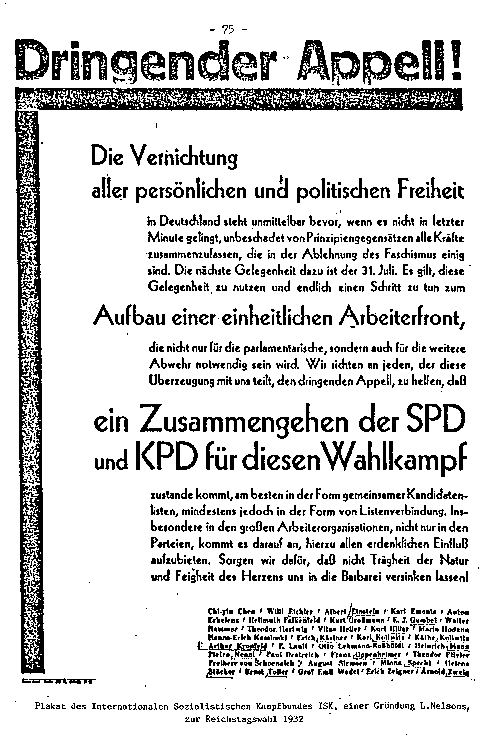


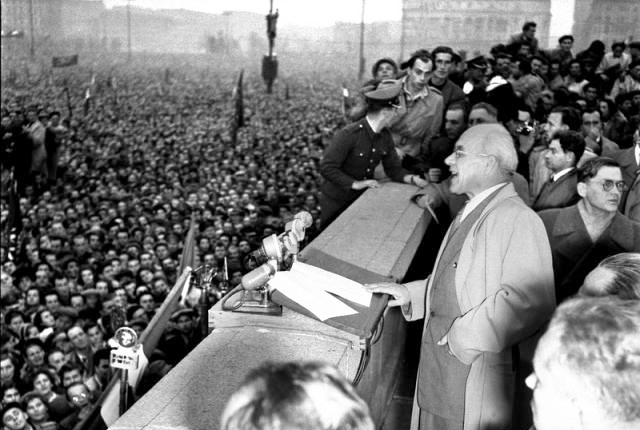
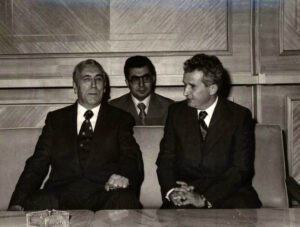
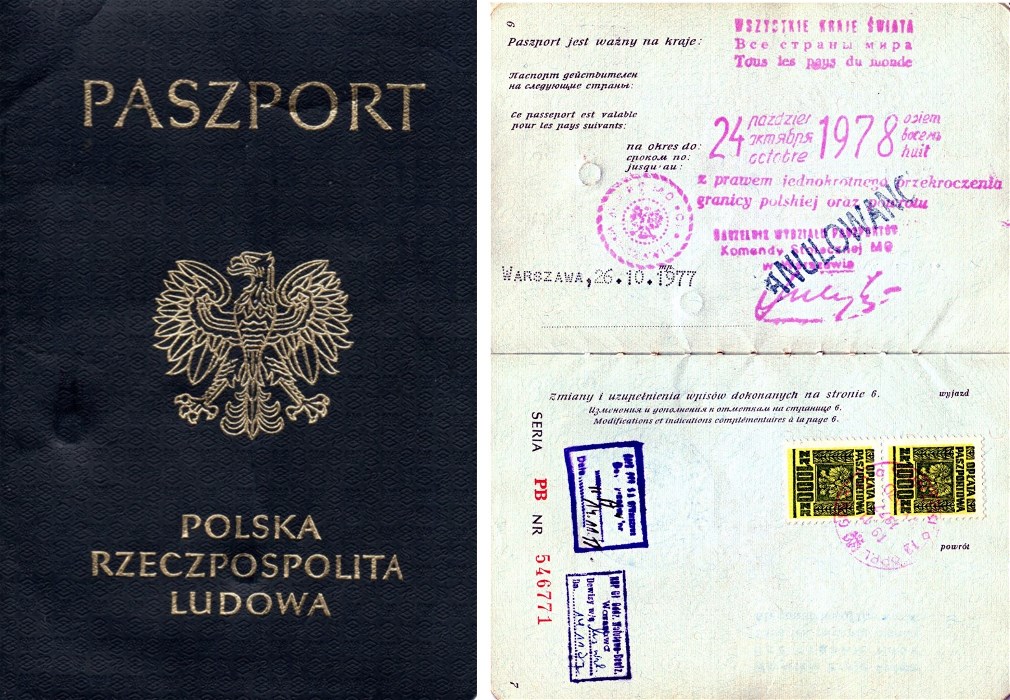
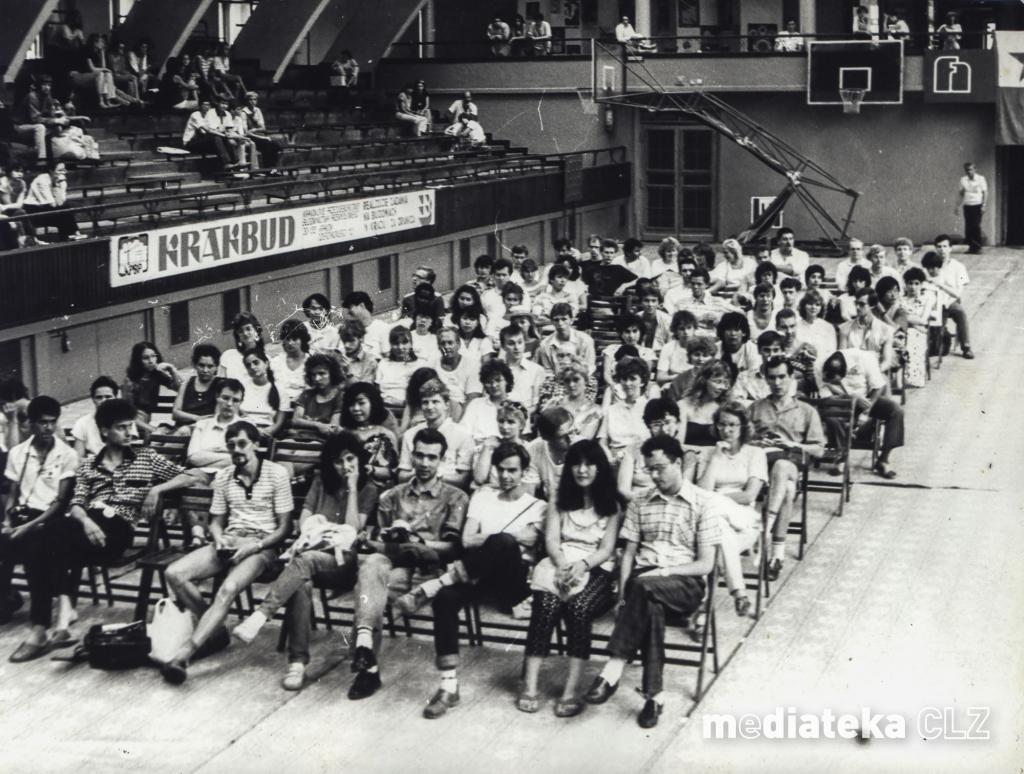
 La plej granda sekreto de
la internacia aktivado kaj sukcesoj de PSEK estis la t.n. persontaga,
sendeviza interŝanĝo, kio signifis ke partopreno de unu eksterlandano
dum unu tago de PSEK-aranĝo egalis al la partopreno de unu PSEK-ano en
eksterlanda aranĝo. Ni havis multajn partnerojn de tiaj interŝanĝoj. La
plej grava kaj la plej ofte uzata estis la PSEK/GEJ kontrakto, sed ni
havis apartajn kontraktojn kun: TEJO, JEFO, JES, JEB, ĈEJ, BEJ, HEJ, NEJ
kaj KCE en Svislando.


