La plenumkomitato de SAT, kaj la organiza komitato de la 95-a SAT-kongreso, kiu devis okazi ĉi-jare en Moskvo, diskonigis komunan deklaron pro la milito en Ukrainio. Libera Folio publikigas ĝian tekston.
Komuna Deklaro de SAT Plenumkomitato kaj la Organiza Komitato por la 95-a SAT-kongreso, kiu devintus okazi ĉi-jare en Moskvo
La Organiza Kongresa Komitato por la 95-a Kongreso de SAT, kune kun la Plenum-komitato de SAT, konstatas, ke pro la morala kaj praktika maleblo okazigi kongreson de SAT en militanta lando, la kongreso ĉi-jare ne povos okazi ĉeeste.
Ni kondamnas la teruran agreson de la nuntempa registaro en Rusio kontraŭ la ukraina popolo. Ni subtenas la kontraŭmilitan movadon en Rusio, kaj esperantistojn, laboristojn, studentojn kaj popolojn en la mondo, kiuj helpas civilulojn en Ukrainio. Diplomatio tutmonde devas agadi por ĉesigi la militon kaj ne akceligi konfliktojn. Ne al milito. Jes al paco!
Dum la sekva periodo ni provos trakti diversajn manierojn krei alternativojn al la ĉeesta kongreso planita por Moskvo. Ni esperas okazigi aranĝojn, verŝajne virtualajn, kiuj ebligos esperantistojn interkompreniĝi kaj diskuti pri diversaj pacmovadoj, sociaj reagoj kontraŭ milito, kaj simile. Ni ankaŭ provos serĉi manieron okazigi kongreson iamaniere, eĉ se virtuala, kaj intencas fokusigi ĝin pri pacmovadoj. Ni bonvenigos proponojn de SAT-membroj kaj aliaj esperantistoj pri tiaj temoj.
Plenumkomitato – Sennacieca Asocio Tutmonda Organiza Kongresa Komitato – 95-a Kongreso de SAT
Declaration of SAT against the war in Ukraine
The SAT Executive Committee, and the organising committee of the 95th SAT Congress, which was to be held in Moscow this year, issued a joint statement on the war in Ukraine. Libera Folio publishes its text.
Joint declaration of the SAT Executive Committee and the organising committee of the 95th SAT Congress, which was to be held this year in Moscow.
The Congressional Organising Committee for the 95th Congress of SAT, together with the Executive Committee, states that due to the impossibility of holding a SAT congress in a warring country, the congress will not be able to take place this year.
We condemn the aggression of the current Russian government against the Ukrainian people. We support the anti-war movement in Russia and Esperantists, workers, students and people who are helping the civilians of Ukraine. Diplomacy worldwide must be used to end the war and not escalate the conflict. No to war, yes to peace.
In the meantime, we will try different methods to create an alternative to the upcoming congress in Moscow. We hope to hold gatherings, possibly virtual, that will let Esperantists connect and discuss different peace movements and activism against war etc.We will also try to find a way to hold a congress, even if it is virtual, and intend to focus on peace movements. We welcome suggestions from SAT members and other Esperantists on such topics.
La
Esperanto-movado dum kelkaj postmilitaj jardekoj estis forta en kelkaj
landoj de la tiama sovetia bloko, kaj precipe en Pollando. Esperanto
donis ŝancon pri internaciaj kontaktoj eĉ trans la fera kurteno.
Samtempe la Esperanto-movado estis uzata de la regantoj por propagando,
observata kaj kontrolata de la ŝtato. Jarek Parzyszek rakontas pri siaj
spertoj en la pola studenta movado.
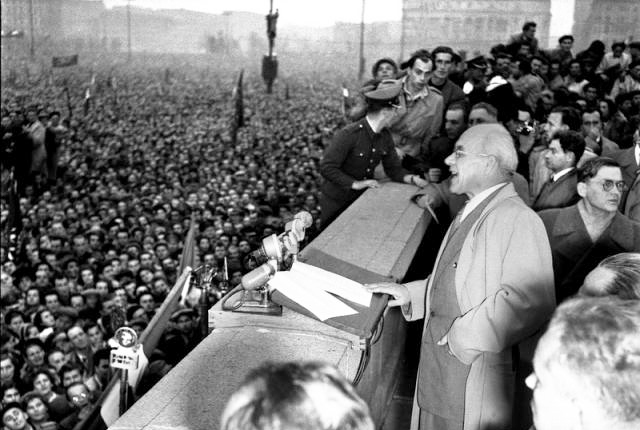
Władysław
Gomułka parolas al popolamaso en Varsovio en oktobro 1956. Dum la
komenca periodo de sia regado li estis tre populara. Fine de la 1960-aj
jaroj li iniciatis kontraŭjudan kampanjon por silentigi kritikajn
voĉojn. Li perdis sian partiestran postenon lige kun popolaj protestoj
en 1970.
Fondita
en Zakopane, suda Pollando, en 1972, Pola Studenta Esperanto-Komitato
estis sukcesa provo kunordigi la agadon de sendependaj studentaj –
edukaj, sciencaj, kulturaj kaj turismaj Esperanto-rondoj kaj kluboj,
kiuj funkciadis en multaj polaj universitataj urboj. La organiza kaj
financa bazo por la plimulto de la rondoj estis Asocio de Polaj
Studentoj (APS).
Studentaj
polaj esperantistaj kluboj kaj rondoj ekaperis en la polaj
universitatoj post la falo de Bierut-reĝimo (do post 1956). Por poloj,
post la morto de Bierut, ŝajnis ke kune kun Właysław Gomułka venis nova,
pli bona epoko: aperis novaj revuoj, kelkaj pli frue malpermesitaj
autoroj rajtis aperigi siajn librojn aŭ prezenti spektaklojn, oni povis
dum kelkaj jaroj publike rememori la rolon de la Landa (subtera) Armeo,
multaj intelektuloj rajtis vojaĝi ne nur al Orienta Europo – sed tiu
”libereco” rapide finiĝis.
La
plej multaj el la esperantistaj rondoj kunlaboris kun aŭ eĉ fakte
funkciis nur danke al APS. En la 60-aj kaj en la 70-aj jaroj granda
plimulto de polaj studentoj apartenis al APS, kiu fakte monopoligis la
organizan aktivadon de polaj studentoj tiel ke preskaŭ ĉiuj
interesgrupoj devis elekti formon de oficiala kunlaboro kun APS.
Substrekendas, ke oficiale ne ekzistis aliaj junularaj organizaĵoj. La
ŝtato ”zorgis”, ke la junularaj organizaĵoj ne fordrivu en ”malĝusta”
direkto.
Krom
la departemento pri junularo en la Centra Komitato de la komunista
partio (Pola Ununiĝinta Laborista Partio), gvidata de aparta sekretario
pri la “ĝusta” direkto de junulara aktivado, zorgis financaj ŝtatoservoj
dividantaj subvenciojn, pasportoservoj donantaj permesojn (“pruntantaj”
pasportojn) por vojaĝi, cenzur-oficejoj: centra en Varsovio kaj
vojevodiaj, polico (nomata milicja) kaj sekretaj ŝtataj servoj, kun
miloj da sekretaj kunlaborantoj, kiuj raportadis pri diversaj kampoj de
socia aktivado.
La kontrolado okazadis ankaŭ oficiale, interne de la unuopaj organizaĵoj lok- kaj landnivele.
El mia preskaŭ 10-jara sperto de
Esperanto-aktivado en Pola Popola Respubliko mi praktike scias ke la
pola Esperanto-movado, precipe la studenta, estis observata kaj
kontrolata de la ŝtato.
Kompreneble
ne nur polaj studentoj-esperantistoj estis observataj kaj kontrolataj ‒
tute kontraŭe. Dum la 1980-aj (kaj ŝajne ankau dum la 1970-aj) jaroj
Pollando estis ”la plej libera” inter la socialismaj landoj. Dum kaj
post la ”milita stato” (1981-84) niaj amikoj el GDR, Sovetunio,
Bulgario, Rumanio, Ĉeĥoslovakio, timis aŭ ne povis viziti Pollandon,
escepte de nombre limigitaj grupoj, organizitaj de Komsomol, FDJ kaj
tiel plu.
Pola
Studenta Esperanto-Komitato neniam estis sendependa organizaĵo, ĝi
fakte eĉ ne estis organizaĵo laŭ jura vidpunkto. Ĝi estis centra
reprezentantaro de polaj studentoj-esperantistoj, konsistanta el po unu
reprezentanto de ĉiu funkcianta studenta rondo/klubo. Ĉar la plej multaj
studentaj Esperanto-rondoj kaj kluboj havis en sia nomo la vorton
”scienca”, PSEK funkciis ĉe la Scienca Komisiono de la Ĉefa Konsilio de
Asocio de Polaj Studentoj.
Fakte
tiu ”scienca” karaktero estis plej ofte nur oficiala ”nomkovraĵo”,
preteksto por ricevadi ŝtatajn subvenciojn por ”sciencaj kaj edukaj”
aranĝoj pri diversaj temoj kiel paco, Kosmo, Lenin-heredaĵo ktp., por
eldonaĵoj kaj esplorvizitoj. Fakte kelkaj studentaj rondoj efektive
sukcesis sciencigi la esploradon pri Esperanto, interlingvistiko kaj
internacia lingva komunikado: ekzemple tiu de la varsovia universitato,
gvidata interalie de Ryszard Rokicki (la dua PSEK-prezidanto), Barbara
Jędrzejczyk (poste Rokicka) kaj Jerzy Leyk.
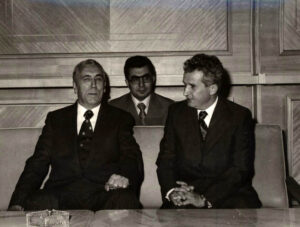
Edward Gierek (ĉi tie kune kun nekonata interpretisto kaj Nicolae Ceauşescu) estis la partiestro en Pollando ekde 1970 ĝis 1980.
La
varsovianoj jam komence de la 70-aj jaroj okazigadis Sciencajn
Interlingvistikajn Seminariojn (poste: Simpoziojn). Grandsukcesaj SIS-oj
en la 80-aj jaroj estis aranĝitaj de Akademia Centro Interlingvistika,
funkcianta ĉe PSEK, ariganta PSEK-eksaktivulojn, kiu eldonadis
postsimpoziajn materialojn kaj apartajn interlingvistikajn kajerojn. La
ĉefmotoroj de ACI estis Barbara kaj Ryszard Rokicki.
Dua centro estis la
studenta scienca rondo en la urbo Łódź, kiu, kunlabore kun APS,
organizis ĉe la Lodza Universitato internaciajn konferencojn pri
internacia lingva komunikado, eldonante riĉenhavajn postkonferencajn
materialojn dulingve. La ĉefa motoro de tiuj konferencoj estis la kvara
PSEK-prezidanto Tadeusz Ejsmont, kiu en 1982 doktoriĝis pri Esperanto ĉe
la Lodza Universitato. El Lodzo venis kaj tie vivas la unua
PSEK-prezidanto (dum du oficperiodoj), Władysław Stec.
PSEK
aktivadis ne nur sciencterene, sed ankaŭ kulture. Jam antaŭ la
PSEK-epoko, helpe de Asocio de Polaj Studentoj, Marek Pietrzak fondis en
1958 Polan Esperanto-Junularon, kaj li longe redaktis la
kulturan-edukan revuon TAMEN, eldonatan unue en Toruń (1959-60), poste
en Vroclavo (1960-64) kaj fine en Varsovio (1965-67). Fine de la 80-aj
kaj komence de la 90-aj jaroj de PSEK estis eldonata Studenta Gazeto,
kiun ĉefredaktis Jarosław Miklasz el Bydgoszcz kaj en la redaktoteamo
kunlaboris i.a. Krzysztof Łobacz, Elżbieta Malik kaj Jarosław Parzyszek.
Sukcesojn
kulturkampe kultivis PSEK-filoj: Esperanta Kultura Societo en Poznań
(fondita de Paweł Janowczyk, Zbigniew Kornicki, Andrzej Naglak, Alicja
Lech kaj daŭrigata de Leszek Lewandowski) kaj en Zielona Góra ĝis 1992
Kooperativo Verda Monto, gvidata de Jerzy Rządzki, kiu pli frue fondis
kaj gvidis Studentan Esperanto-Teatron kaj okazigadis en kaj apud
Zielona Góra teatro- kaj kulturfestivalojn. En tiu teatro la ĉefrolojn
plenumis interalie Dorota Świerstok (nun Polaczek), Mira Rządzka, Leszek
Lewandowski kaj Anna Szumska (nun Hanna Szczęsna).
Esperanto-Kultura
Societo dum kelkaj jaroj kunlaboris kun la Kultura Komisiono de APS
eldonante kelkajn interesajn volumetojn, ekzemple la poemkolekton Mi estas nur virino de Anna Świrszczyńska en traduko de Tomasz Chmielik, Doktryna Zamenhofa de Jarosław Parzyszek kaj Esperanto i nauka de d-ro Leszek Kordylewski.
La ĉefa inspiro de PSEK tamen estis
nek scienco nek kulturo, sed vojaĝoj. Dank’ al la APS-ombrelo
PSEK-delegitoj amase vojaĝadis al internaciaj Esperanto-aranĝoj, ĉefe en
Eŭropo sed ne nur, ekzemple en 1981 al Brazilo kaj en 1986 al la
israela IJK en Neurim veturis 4 PSEK-reprezentantoj. Tiaj eksterlandaj
vojaĝoj estis multe pli komplikaj kaj finance nepageblaj por PEJ-anoj,
pro tio ofte PSEK-anoj reprezentis Pollandon en TEJO-Komitato kaj foje
eĉ estis TEJO-estraranoj (Jan Koszmaluk, Jarosław Parzyszek).
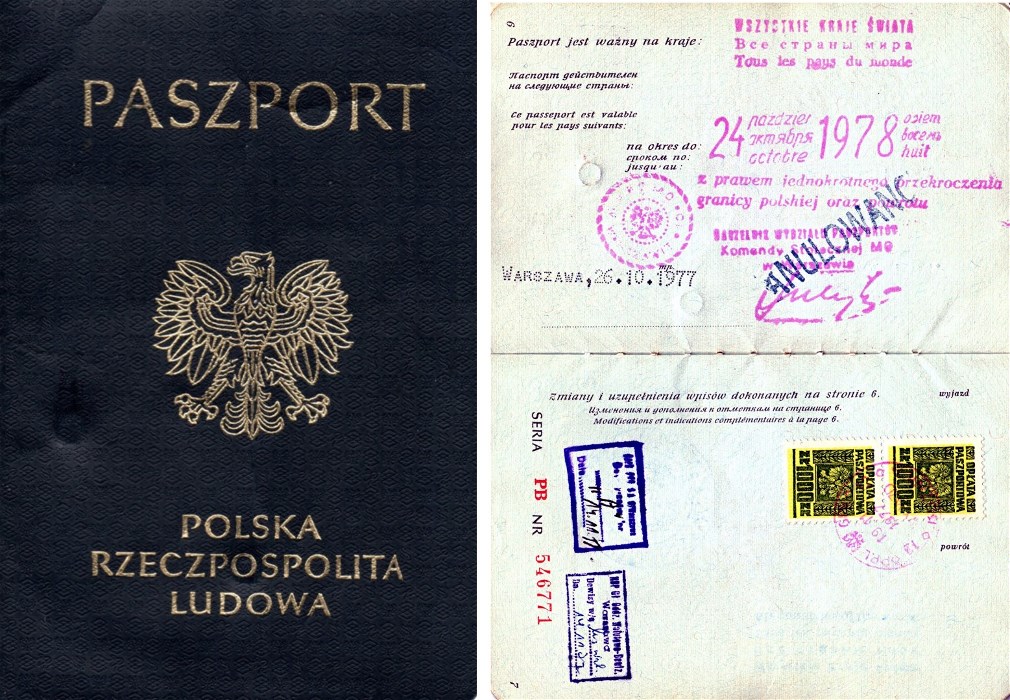
Pasporto de Pola Popola Respubliko. Foto: Jerzy Kuśmider
En
la Pola Popola Respubliko ekzistis tri kategorioj de pasportoj, kiuj
tiam ne estis propraĵo de la civitanoj sed de la ŝtato, kaj la ŝtato
povis afable permesi al siaj civitanoj pruntepreni pasporton por vojaĝi
eksterlanden. En la Centra Oficejo de APS, ĉe la strato Ordynacka 9 en
Varsovio, funkciis pasporto-deponejo kun rekta kontakto kun la
Ministerio pri Internaj Aferoj.
Por
oficala vojaĝo oni ricevis duonprivatan pasporton (kun la litero ”B”),
kiu ebligis vojaĝi nur al socialismaj landoj, aŭ kun speciala stampo
rajtigis vojaĝi al ĉiuj ŝtatoj de la mondo. La Pasporta Deponejo de APS
helpis ankaŭ ricevi vizojn al t.n. kapitalismaj landoj.
Ankaŭ
la lokaj (vojevodiaj) pasportoficejoj “pruntis” pasportojn al
studentoj-esperantistoj, surbaze de la oficialaj invitleteroj kun
aldonaj rekomendoleteroj sur la oficiala papero de Asocio de Polaj
Studentoj. Oni povis kaj foje sukcesis ricevi pasporton sen tia letero,
sed tiu vojo kutime estis pli longdaŭra kaj necerta.
La
PSEK-delegitoj devis post la oficialaj vizitoj verki kaj rapide liveri
al APS oficialajn raportojn. Parto de la raportoj, eble eĉ ĉiuj, estis
plusendataj al la ministerio pri internaj aferoj aŭ/kaj ties lokaj
oficejoj. Foje, krom la ”oficiala” (formale publika) raporto la
delegitoj estis petataj pri apartaj, sekretaj raportoj.
Ekzemple en 1986 de mi, tiama
prezidanto de PSEK kaj estrarano de TEJO, invitita partopreni TEJO/KER
Seminarion en la Eŭropa Junulara Centro en Strasburgo, oni ‒ funkciulo
de sekreta servo ‒ postulis apartan raporton pri la neoficialaj okazaĵoj
kaj interparoloj en Strasburgo. Tiam, timante la postsekvojn, mi
rifuzis prepari tian raporton kaj finfine ne veturis al la seminario,
sed Pollandon reprezentis du aliaj homoj.
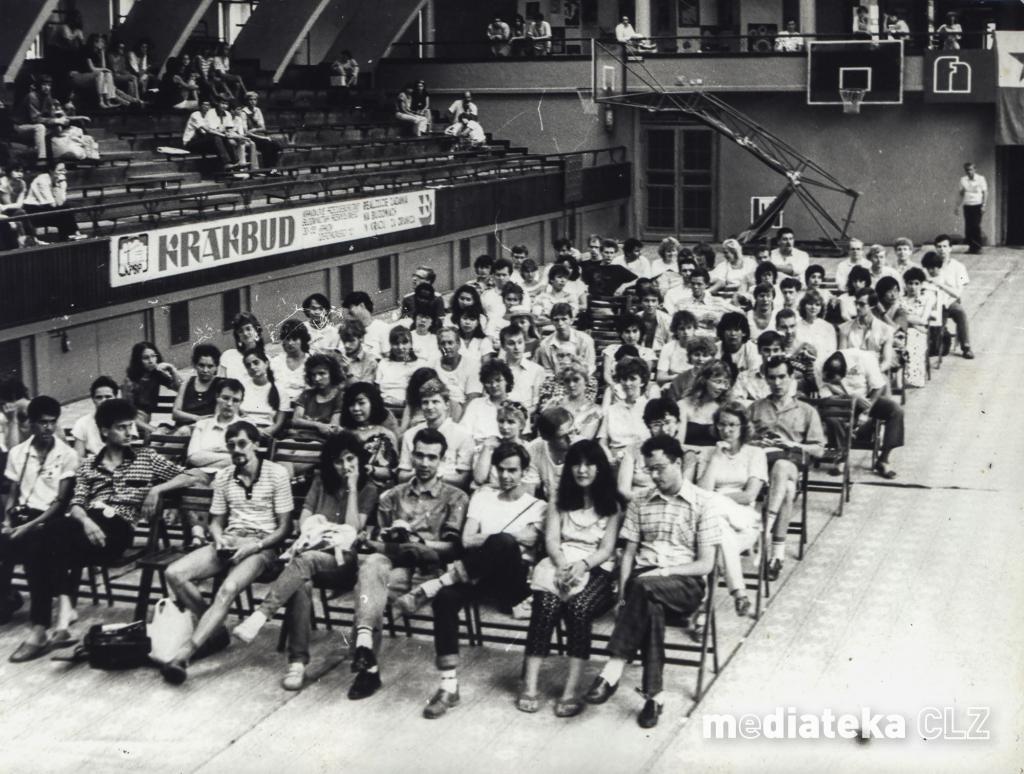
Kun
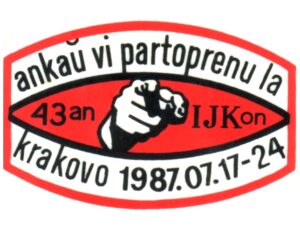
tiu servo mi tamen devis havi kontaktojn antaŭ kaj dum la 43-a IJK en
Krakovo: mi, kiel PSEK-prezidanto kaj LKK-vicprezidanto respondecis pri
la oficialaj invitoj de la eksterlandanoj kaj liveradis la listojn de la
invititoj al la ministerio, krome mi raportis pri la programo kaj la
kongresaj eldonaĵoj. Kelkaj certe memoras la panikon antaŭ la
IJK-inaŭguro, kiam la sekreta agento postulis de mi aldoni al la
kongreslibra listo de la partoprenantoj 6-personan liston de la
“civitanoj” de Okcidenta Berlino, kiuj laŭ la oficiala doktrino ne estis
civitanoj de la Federacia Respubliko Germanio, sed de aparta “ŝtato”.
Poste
kune kun kelkaj LKK-anoj ni kolektis la kontraŭreĝimajn foliojn kiujn,
dum la ekskursotago de la Krakova IJK, disĵetis unu el la polaj
IJK-partoprenantoj.
Ni,
mi kaj kelkaj aliaj LKK-anoj, sciis ke en la IJK-kongresejo (la
sporthalo de Wisła) en Krakovo la kongreson de supre, senĉese observadis
kelkaj sekretaj funkciuloj. Unu el tiuj funkciuloj kontaktis min ankaǔ
dum la 72-a UK en Varsovio, kie mi respondecis pri la junualara
programo. Lin interesis ne la UK-programo sed la neoficialaj
interparoloj.
La plej granda sekreto de
la internacia aktivado kaj sukcesoj de PSEK estis la t.n. persontaga,
sendeviza interŝanĝo, kio signifis ke partopreno de unu eksterlandano
dum unu tago de PSEK-aranĝo egalis al la partopreno de unu PSEK-ano en
eksterlanda aranĝo. Ni havis multajn partnerojn de tiaj interŝanĝoj. La
plej grava kaj la plej ofte uzata estis la PSEK/GEJ kontrakto, sed ni
havis apartajn kontraktojn kun: TEJO, JEFO, JES, JEB, ĈEJ, BEJ, HEJ, NEJ
kaj KCE en Svislando.
La
internacia historio de PSEK finiĝis post la falo de la Pola Popola
Respubliko. Unue, pro la ekonomia krizo, la nekomunista registaro de
Mazowiecki/Balcerowicz preskaŭ komplete nuligis la ŝtatajn subvenciojn,
due la civitanoj ricevis la rajton libere vojaĝi kaj finfine fariĝis
posedantoj de pasportoj por la tuta mondo, trie niaj Esperanto-partneroj
nuligis la kontraktojn pri la sendeviza interŝanĝo.
En
1992 en Gdańsk okazis la 14-a Studenta Somera Esperanto-Renkonto (la
unuaj 12 SER okazadis en Toruń) kaj la jubilea seminario kaj balo de
PSEK, kiun organizis la lasta PSEK-prezidanto, Adam Cholewiński, kaj
partoprenis interalie la unua PSEK-prezidanto Władysław Stec kaj mi. Laŭ
mia scio tiu estis la lasta aranĝo kaj la fino de la PSEK-historio.
During
the post war years the Esperanto movement was strong in several nations
within the Soviet Bloc, especially Poland. Esperanto gave people a
chance for international contacts, even beyond the Iron Curtain. But at
the same time the Esperanto movement was used by their ruling regimes
for propaganda, observation and control by the state. Jarek Parzyszek
tells us of his experiences within the Polish student movemnt.
Władysław
Gomułka, speaking to the masses in Warsaw in 1956. During the early
days of his rule he was quite popular. However, by the end of the 1960s
he had launched anti-Jewish campaigns to silence critics, he was deposed
as party leader following popular protests in 1970.
Founded
in 1972 in Zakopane South Poland, the Polish Student Esperanto
Committee was a successful attempt to co-ordinate the activities of
several independent - educational, scientific, cultural and tourist -
groups and clubs which were operating in many Polish university cities.
The organisational and financial base for the majority of these clubs
was the Association of Polish Students (APS).
Polish
student Esperanto clubs started appearing in Universities after the
fall of the Bierut regime, (so after 1956). For Poles, after the death
of Bierut, it seemed that together with Właysław Gomułka we
would have a new and better era. New magazines appeared, a few authors
who had been banned before were allowed to publish their books or put on
shows, the role of the National (Underground) Army could be publicly
remembered for a few years, a few intellectuals were allowed to travel
beyond Eastern Europe- but this freedom soon disappeared.
The
majority of the Esperanto clubs collaborated with, or were entirely
dependent upon the APS. In the 1960s and 70s the vast majority of
students belonged to the APS, which in fact monopolised the
organisational activity of Polish students so that almost all interest
groups had to establish some kind of official relationship with the APS.
It should be noted that there were no other official youth
organisations. The state "took care" to ensure that youth organisations
did not drift in the "wrong" direction.
In
addition to the department for youth attached to the Central Committee
of the communist party (Polish United Workers Party) which was led by a
special secretary on the "right" path for youth activities, there were
responsibilities for the division of finances, approval of passports
("lending passports") for travel, censorship officers, central office in
Warsaw and others in the provinces, police (called militia) and secret
state services, with thousands of secret collaborators who reported on
various fields of social activity.
The control was also maintained officially, through inspections of the individual organisations on a local and national level.
From my almost 10 years of Esperanto Activism
in the People's Republic of Poland, I knew from direct experience that
the Polish Esperanto movement, and the student movement in particular
was monitored and controlled by the state.
Of
course, it was not just the Polish Esperanto students who were monitored
and controlled, quite the contrary. During the 1980s (and apparently
also in the 1970s) Poland was the "Least free" of all the Socialist
nations. During and after the "state of war" our friends from the DDR,
Soviet Union, Bulgaria, Romania, Czechoslovakia, were frightened to or
could not visit us except as part of a limited number of groups that
were organised by the Komsomol, FDJ etc.
The
Polish Student Esperanto Committee was never an independent
organisation, in fact it was not even an organisation from a legal point
of view. It was a central representation of Polish
student-Esperantists, consisting of one representative from each
functioning student circle / club. As most Esperanto student circles and
clubs had the word "scientific" in their name, PSEK served on the
Scientific Committee of the Main Council of the Polish Students'
Association.
Edward
Gierek (with an unknown interpreter) together with Nicolae Ceausescu,
was the communist party leader of Poland from 1970-1980.
In
fact, this "scientific" character was often just an official "cover", a
pretext for receiving state grants for "scientific and educational"
events on various topics such as peace, the cosmos, Lenin's legacy,
etc., for publications and research visits. Although a number of student
circles have actually succeeded in researching Esperanto,
interlinguistics and international language communication: for example,
the University of Warsaw, led by Ryszard Rokicki (second PSEK
president), Barbara Jędrzejczyk (later Rokicka) and Jerzy Leyk.
Warsawians
were holding Scientific Interlinguistic Seminars (later: Symposia) in
the early 1970s. Successful SISs in the 1980s were organized by the PSEK
Academic Center, which operated at the PSEK, bringing together PSEK
activists who published post-symposium materials and separate
interlinguistic notebooks. ACI's main drivers were Barbara and Ryszard
Rokicki.
The second centre was the
student scientific circle in the city of Łódź, which, in collaboration
with APS, organized international conferences on international language
communication at the University of Łódź,, publishing rich bilingual
post-conference materials. The main driving force behind these
conferences was the fourth PSEK president, Tadeusz Ejsmont, who received
his doctorate in Esperanto from the University of Łódź, in 1982. The
first PSEK president (Władysław Stec) came from Łódź, and served for two
terms.
PSEK has been active not only in
science but also in culture. Already before the PSEK era, with the help
of the Polish Students' Association, Marek Pietrzak founded the Polish
Esperanto Youth in 1958, and he edited for a long time the
cultural-educational magazine TAMEN (However), published first in Toruń
(1959-60), then in Wrocław (1960-64) and finally in Warsaw (1965-67). A
Student Gazette was published in the late 1980s and early 1990s by PSEK,
edited by Jarosław Miklasz from Bydgoszcz and co-edited by the
editorial team i.a. Krzysztof Łobacz, Elżbieta Malik and Jarosław
Parzyszek.
Successes in the cultural field were
cultivated by PSEK sons: the Esperanto Cultural Society in Poznań
(founded by Paweł Janowczyk, Zbigniew Kornicki, Andrzej Naglak, Alicja
Lech and continued by Leszek Lewandowski) and in Zielona Góra until 1992
at the Green Mountain Cooperative, led by Jerzy Rządzki who earlier
founded and directed Student Esperanto Theatre and held theatre and
cultural festivals in and around Zielona Góra. The theatre stars Dorota
Świerstok (now Polaczek), Mira Rządzka, Leszek Lewandowski and Anna
Szumska (now Hanna Szczęsna).
For several
years, the Esperanto Cultural Society had collaborated with the APS
Cultural Commission by publishing some interesting volumes, such as the
collection of poems I am Only a Woman by Anna Świrszczyńska translated by Tomasz Chmielik, Doktryna Zamenhofa by Jarosław Parzyszek and Esperanto i nauka by Dr. Leszek Kordylewski .
PSEK's
main inspiration, however, was neither science nor culture, but travel.
Thanks to the APS umbrella, PSEK delegates traveled en masse to
international Esperanto events, mainly in Europe but not only, for
example in 1981 to Brazil and in 1986 to the Israeli IJK in Neurim
traveled 4 PSEK representatives. Such trips abroad were much more
complicated and financially unaffordable for PEJ members, which is why
PSEK members often represented Poland on the TEJO Committee and were
sometimes even TEJO board members (Jan Koszmaluk, Jarosław Parzyszek).
Passport of the Polish People's Republic, photo Jerzy Kuśmider
In
the People's Republic of Poland there were three categories of
passports, which were then not the property of the citizens but of the
state, and the state could kindly allow its citizens to borrow a
passport to travel abroad. At the APS Central Office, at 9 Ordynacka
Street in Warsaw, there was a passport depot with direct contact with
the Ministry of the Interior.
For a formal trip, a
semi-private passport (with the letter "B") was issued, which made it
possible to travel only to socialist countries, or with a special stamp
allowed to travel to all states of the world. The APS Passport Deposit
also helped get visas to capitalist countries.
The
local (regional) passport offices also "lent" passports to
student-Esperantists, based on the official invitation letters with
additional letters of recommendation on the official paper of the Polish
Students' Association. One could and sometimes did get a passport
without such a letter, but that route was usually longer and more
uncertain.
The PSEK delegates had to write and
quickly deliver official reports to APS after the official visits. Some
of the reports, possibly all of them, were forwarded to the Ministry of
the Interior and / or its local offices. Sometimes, in addition to the
"official" (formally public) report, delegates were asked for separate,
secret reports.
For example, in 1986 I
was invited by the then PSEK President and TEJO Board Member to attend a
TEJO / KER Seminar at the European Youth Center in Strasbourg. Then,
fearing the aftermath, I refused to prepare such a report and in the end
did not travel to the seminar, but Poland was represented by two other
people.
The International Youth Congress in Krakow, 1987, photo: Mediateko CLZ
However,
I had to have contacts with this service before and during the 43rd IJK
in Krakow: I, as PSEK president and LKK vice-president, was responsible
for the official invitations of the foreigners and delivered the lists
of the guests to the ministry, reported on the program and the
congressional publications. Some certainly remember the panic before the
IJK inauguration, when the secret agent demanded that I add to the list
of participants a 6-person list of the "citizens" of West Berlin who,
according to official doctrine, were not citizens of the Federal
Republic of Germany (West Germany), but of a separate "state".
Then
together with some LKK members we collected the anti-regime leaflets
which, during the excursion day of the Krakow IJK, were scattered by one
of the Polish IJK participants.
We, me and
some other LKK members, knew that in the IJK congress hall (Wisła sports
hall) in Krakow the congress from above, was constantly observed by
some secret officials. One of these officials also contacted me during
the 72nd World Congress in Warsaw, where I was in charge of the youth
program. He was not interested in the World Congress program but in the
informal talks.
The biggest secret of PSEK's
international activity and success was the so-called day-to-day,
non-foreign exchange communications which meant that the participation
of one foreigner during one day of a PSEK event was equal to the
participation of one PSEK member in a foreign event. We have had many
partners from such exchanges. The most important and most frequently
used was the PSEK / GEJ contract, but we had separate contracts with:
TEJO, JEFO, JES, JEB, ĈEJ, BEJ, HEJ, NEJ and KCE in Switzerland.
The
international history of the PSEK ended after the fall of the People's
Republic of Poland. Firstly, due to the economic crisis, the
non-communist government of Mazowiecki / Balcerowicz almost completely
cancelled state subsidies, secondly the citizens were given the right to
travel freely and finally became holders of passports for the whole
world, thirdly our Esperanto partners cancelled the contracts of
currency exchange.
In 1992 in Gdańsk took
place the 14th Student Summer Esperanto Meeting (the first 12 SER took
place in Toruń) and the jubilee seminar and ball of PSEK, organized by
the last PSEK president, Adam Cholewiński, and attended by among others
the first PSEK- President Władysław Stec and I. To my knowledge this was
the last arrangement and the end of PSEK history.
De post 2014, Ukrainio rezistas al la agreso de la Federacio de Rusio (FR)
Post tiu agreso, la Ukrainia Krimeo estis aneksita, partoj de la regionoj de Lugansko kaj Donecko en Ukrainio estis okupaciataj. Dum la ok lastaj jaroj da agreso de la FR, Ukrainio perdis dekojn da miloj da homaj vivoj, pli ol 1,5 miliono da niaj civitanoj estis devigataj fariĝi delokitaj personoj interne de la lando.
Samtempe, la milito kaj la minaco je grandskala invado damaĝas la ukrainian ekonomion. Tio estigas perdon de industriaj instalaĵoj kaj infrastrukturoj en la okupaciataj teritorioj, kaj haltigoj de investoj. Ĉio ĉi havas konsekvencojn por la resursoj kaj la vivkondiĉoj de la laboristoj, kiuj luktas por paco kaj demokratia disvolvado de sia lando.
La prezidento de la Federacio de Rusio, V. Putin, per sia dekreto de la 21a de februaro, agnoskis la memproklamitajn respublikojn de Lugansko kaj Donecko, kiel suverenajn kaj sendependajn Ŝtatojn.
La agnosko de tiuj memproklamitaj respublikoj konsistigas malobservadon de la internacia juro kaj detruadon de la sekureca sistemo, kiu estis starigita post la Dua Mondmilito kaj la disfalo de USSR, kaj malobservadon de la suvereneco, sendependeco kaj teritoria integriĝo de Ukrainio per la efektiva eliro de FR el la akordoj de Minsko.
Krome, la 21an de februaro, la Federacio de Rusio komencis enirigi oficiale rusiajn trupojn en la teritorion okupaciatan de la regionoj de Lugansko kaj Donecko en Ukrainion. (la rusaj dungosoldatoj kaj la profesiaj fortoj, kiuj surhavas identigilojn de la armeaj fortoj de la memproklamitaj respublikoj de Lugansko kaj Donecko jam estis kontraŭleĝe deplojitaj sur la okupaciataj teritorioj).
La ukrainiaj armeaj fortoj respektas strikte la reĝimon pri batalhaltigo. Ili kondukas neniun militan aŭ kontraŭleĝan agon en la okupaciataj teritorioj. Samtempe, sur la teritorio kontrolita de Ukrainio, civiluloj de la regionoj de Donecko kaj Luhansko suferas de semajno senĉesajn artileriajn pafojn devenantajn de la okupaciataj teritorioj.
Krome, la FR kondukas teruran kampanjon por senkreditigi la ukrainian armeon disvastigante amasajn misinformojn, provokojn, bombadojn sub falsa flago en la regionoj de Lugansko kaj Donecko cele al okazo de milito por komenci grandskalan agreson.
La oficiala sinteno de Ukrainio, kiu estis plurfoje anoncita, baziĝas sur serĉo de politika kaj diplomatia vojo por la reveno de la okupaciataj teritorioj.
Nome de la sindikataj organizaĵoj, ni esprimas nian profundan dankemon al la landoj, organizaĵoj, politikuloj kaj personoj, kiuj subtenis Ukrainion dum ĉiuj ĉi jaroj.
Ni petas de la sindikatoj kaj publikaj organizaĵoj, ke ili provizu solidaran subtenon al la ukrainia popolo en sia lukto kontraŭ la agreso de la FR, kaj malhelpu grandskalan militon en Eŭropo, kiu povus tuj ŝanĝi la modelon de disvolviĝo de la eŭropaj landoj kaj la arkitekturo de la tutmonda ordo.
Ni petas de vi diskonigi la Deklaracion de la Ukrainiaj sindikatoj en la sindikataj retejoj, sociaj retoj kaj tujmesaĝiloj.
La ukrainia popolo rezistos kaj venkos en la lukto por sia sendependeco, sia teritoria integriĝo kaj sia civiliza elekto.
Subskribintaj sindikatoj :
Laboristoj de la nukleaj industrio kaj energio de Ukrainio
Sindikatoj de la laboristoj en metalurgiaj kaj minaj industrioj de Ukrainio
Sendependa sindikato de la ministoj de Ukrainio
Unuiĝo de la laboristoj en energio kaj elektroteknika industrio de Ukrainio
Unuiĝo de la laboristoj en la petrola kaj gasa industrioj de Ukrainio
Unuiĝo de la laboristoj en kemia kaj petrokemia industrioj de Ukrainio
Sindikato de la laboristoj en la konstruado de aviadiloj kaj maŝinoj de Ukrainio
Sindikato de la laboristoj en la defenda industrio de Ukrainio
Sindikato de la laboristoj en radio, elektroniko kaj mekaniko de Ukrainio
Sindikato de la laboristoj en aŭtomobilo kaj agrikultura maŝinaro
Sindikato de la mekanika konstruado kaj metalurgio de Ukrainio
Unuiĝo de la Ŝtataj dungitoj de Ukrainio
Unuiĝo de la sanlaboristoj de Ukrainio
Sindikato de la municipa ekonomio, loka industrio, servoj al la popolo de Ukrainio
Sindikato de la laboristoj en gasaj instalaĵoj de Ukrainio
Unuiĝo de la socialaj laboristoj de Ukrainio
Joint Declaration of the Unions of Ukraine
Ukraine has resisted the aggression of the Russian Federation (RF) since 2014. After this aggression Ukrainian Crimea was annexed, and portions of Donetsk and Luhansk in Ukraine were occupied. During the past eight years of aggression from the RF Ukraine has lost tens of thousands of lives, and over 1,500 million people were displaced within the country.
At the same time the violence and the threat of full scale invasion has also damaged Ukraine's economy. This has lead to a loss of industrial facilities and infrastructure within the occupied territories, and a halt to investment. All this has consequences for the resources and living conditions of workers, who are struggling for peace and the democratic development of their country.
The President of the Russian Federation V. Putin recognised by decree the self proclaimed republics of Donetsk and Luhansk as sovereign and independent states. The recognition of these self-proclaimed republics constitutes a violation of international law and the destruction of the security system that was established after the Second World War and the collapse of the Soviet Union, and a violation of Ukraine's sovereignty, independence and territorial integration through the effective exit of the RF from the Minsk Accords.
In addition, on the 21st of February the Russian federation began to officially deploy troops into the territory occupied by the regimes in Donetsk and Luhansk. (Russian mercenaries and professional forces wearing the uniforms of the armed troops belonging to the self-proclaimed republics of Luhansk and Donetsk were already deployed illegally in the occupied territories.)
Ukrainian military forces strictly adhere to the ceasefire regime. They conducted no warfare or illegal action within the occupied territories. At the same time, civilians from the Donetsk and Luhansk region have been suffering incessant artillery fire from the occupied territories for weeks.
In addition, the RF is waging a terrible campaign to discredit the Ukrainian army by spreading false misinformation, provocations, false bombings etc, in the Luhansk and Donetsk regions to provoke war like conditions, to start a large-scale aggression.
Ukraine's official position, which has been repeatedly announced, is based on a search for a political and diplomatic path for the return of the occupied territories.
In the name of the trade unions, we express our deepest gratitude to the countries, organisations, politicians and people who have supported Ukraine during these years.
We call on trade unions and public organisations to provide support to the Ukrainian people in their fight against RF aggression, and to prevent a large-scale war in Europe that could immediately change the development of European countries and the foundations of the global order.
We ask you to disseminate the Declaration of the Ukrainian trade unions on the trade union websites, social networks and instant messengers.
The Ukrainian people will resist and triumph in its struggle for its independence, its territorial integrity and its choice of civilisation.
Union Signatories:
Workers of the nuclear industry and energy of Ukraine
Trade unions in the metallurgical and mining industries of Ukraine
Independent trade union of the miners of the Ukraine
Union of Workers in the Energy and Electrical Industry of Ukraine
Workers' Union in Ukraine's oil and gas industries
Union of Workers in the Chemical and Petrochemical Industries of Ukraine
Workers' Union in the construction of aircraft and machinery of Ukraine
Trade union workers in the defense industry of Ukraine
Union of Radio, Electronics and Mechanical Workers of Ukraine
Workers' Union in Automobile and Agricultural Machinery
Union of Mechanical Engineering and Metallurgy of Ukraine
Union of State Employees of Ukraine
Union of Health Workers of Ukraine
Union of the municipal economy, local industry, services to the people of Ukraine
Sed memoru, memoru, memoru, ke la sola rimedo, por atingi pacon, estas: forigi unu fojon por ĉiam la ĉefan kaŭzon de la militoj… la regadon de unuj gentoj super aliaj gentoj.
Remember, remember, remember, the only means of achieving a lasting peace: is to abolish the root cause of all war. The rule of one people over another. Zamenhof 1914
Samspirite, kiel organizo dediĉita al libereco kaj al respekto de homaj rajtoj, TEJO kondamnas la invadon de Ukrainio iniciatitan de la registaro de Rusio. TEJO strebas al solidareco kaj estimo inter la popoloj kaj pledas por ke homoj, kie ajn en la mondo, ne suferu militon kaj ĝiajn efikojn, kiuj dividas la homaron. La milita agado fare de la registaro de Rusio kontraŭas niajn idealojn pri demokratio, tutmonda paco kaj interkompreniĝo; ĝi estas danĝera malrespekto de la fundamentaj homaj rajtoj. Tial ni decidis ne silenti pri ĝi.
TEJO solidarecas kun ĉiuj viktimoj de militoj: kun mortigitoj kaj vunditoj kaj kun ĉiuj rifuĝintoj. Al ĉiuj niaj membroj, aktivuloj, partneroj kaj samideanoj en Ukrainio ni dissendas nian subtenon. Ni ankaŭ agnoskas la suferon de rusianoj, kiuj estis kontraŭvole enplektitaj en la militon. Ni solidarecas kun la kuraĝaj rusianoj, kiuj manifestacias kontraŭ ĝi riskante malliberiĝon. Ni salutas tiujn pacajn batalantojn kiel parolantoj de lingvo de paco. Ni petas al niaj samideanoj en la tuta mondo, kaj aparte en Ukrainio kaj Rusio, interkompreneme kaj gefrate dialogi por flegi pacajn rilatojn inter la homoj, malgraŭ la kondamninda ago de la registaro de Rusio.
TEJO alvokas por paco en Ukrainio kaj tra la mondo, por ke homoj povu vivi sen risko de perforto, morto aŭ subpremo. Ni pledas por la tuja retiriĝo de la militistaro de Rusio el Ukrainio kaj por la respekto de la homaj rajtoj. Ni alvokas al ĉiuj internaciaj instancoj strebi utiligi diplomation por ĉesigi konfliktojn, provizi savan helpon al la viktimoj kaj konstrui stabilan mondan pacon. Tio baziĝu sur la respekto de ĉies homaj rajtoj, inkluzive de lingvaj rajtoj de etnaj malplimultoj. Ni apelacias al ĉiu esperantisto tra la tuta mondo: subtenu la homajn rajtojn, pacon kaj interkompreniĝon.
Tutmonda Esperantista Junulara Organizo (TEJO)
la 27-an de Februaro 2022
Por konkrete subteni esperantistojn trafitajn de la milito, vi povas donaci al Konto Espero de UEA. Nun TEJO estas aktive enplektita en transnacia laborgrupo de la Forumo Junulara Eŭropa (FoJE). La laborgrupo celas kunigi informojn inter Ukrainio kaj eŭropuniaj najbaraj landoj por efike disponigi bezonatajn rimedojn. Se vi povas helpi aŭ deziras kontribui al la agado de TEJO, kontaktu la Oficejon de TEJO aŭ la Komisionon pri Eksteraj Rilatoj (KER).
Declaration of TEJO on Solidarity with Ukraine
Remember, remember, remember, the only means of achieving a lasting peace: is to abolish the root cause of all war. The rule of one people over another. Zamenhof 1914
It is in the same spirit, that TEJO, an organisation dedicated to liberty and human rights, condemns the invasion of Ukraine instigated by the Russian government. TEJO strives for solidarity and respect between the people's of the world, and desires that no one, wherever they are in the world do not suffer from war and its massive traumas, which drive people apart. The military attacks by the Russian government are against our ideals of democracy, world peace, and mutual understanding: it is a serious insult to the fundamentals of human rights. That is why we have decided to not be silent about it.
TEJO, is in solidarity with the victims of all wars:with the dead and the wounded and every refugee. To all of our members, activists, partners and fellow Esperantists in Ukraine we send our support. We also acknowledge the suffering of Russians, who were reluctantly dragged into this war. We also support brave Russians who are courageously protesting the war and risk arrest. As speakers of the language of peace we salute those fighters for peace. We urge our like-minded people around the world, and especially in Ukraine and Russia, to engage in mutual understanding and fraternal dialogue in order to foster peaceful relations between the people, despite the reprehensible action of the Russian government.
TEJO calls for peace in Ukraine and throughout the world, so that people can live without the threat of violence, death, or oppression. We plead for the immediate withdrawal of the Russian military from Ukraine and for the respect of human rights.We call on all international bodies to strive to use diplomacy to end conflicts, provide rescue assistance to victims and build stable world peace.This should be based on respect for the human rights of all, including the linguistic rights of ethnic minorities.We appeal to every Esperantist all over the world: to uphold human rights, peace and understanding.
World Organisation of Esperantist Youth (TEJO)
To concretely support Esperantists affected by the war, you can donate to UEA's Konto Espero. TEJO is now actively involved in the European Youth Forum's (FoJE) transnational working group. The aim of the working group is to gather information between Ukraine and neighboring European countries in order to effectively provide the necessary resources. If you can help or wish to contribute to the activities of TEJO, contact the TEJO Office or the Commission on External Relations (KER).


 La plej granda sekreto de
la internacia aktivado kaj sukcesoj de PSEK estis la t.n. persontaga,
sendeviza interŝanĝo, kio signifis ke partopreno de unu eksterlandano
dum unu tago de PSEK-aranĝo egalis al la partopreno de unu PSEK-ano en
eksterlanda aranĝo. Ni havis multajn partnerojn de tiaj interŝanĝoj. La
plej grava kaj la plej ofte uzata estis la PSEK/GEJ kontrakto, sed ni
havis apartajn kontraktojn kun: TEJO, JEFO, JES, JEB, ĈEJ, BEJ, HEJ, NEJ
kaj KCE en Svislando.
La plej granda sekreto de
la internacia aktivado kaj sukcesoj de PSEK estis la t.n. persontaga,
sendeviza interŝanĝo, kio signifis ke partopreno de unu eksterlandano
dum unu tago de PSEK-aranĝo egalis al la partopreno de unu PSEK-ano en
eksterlanda aranĝo. Ni havis multajn partnerojn de tiaj interŝanĝoj. La
plej grava kaj la plej ofte uzata estis la PSEK/GEJ kontrakto, sed ni
havis apartajn kontraktojn kun: TEJO, JEFO, JES, JEB, ĈEJ, BEJ, HEJ, NEJ
kaj KCE en Svislando.


